



Race Circuits in Germany — the Guide from People Who Actually Drive Them

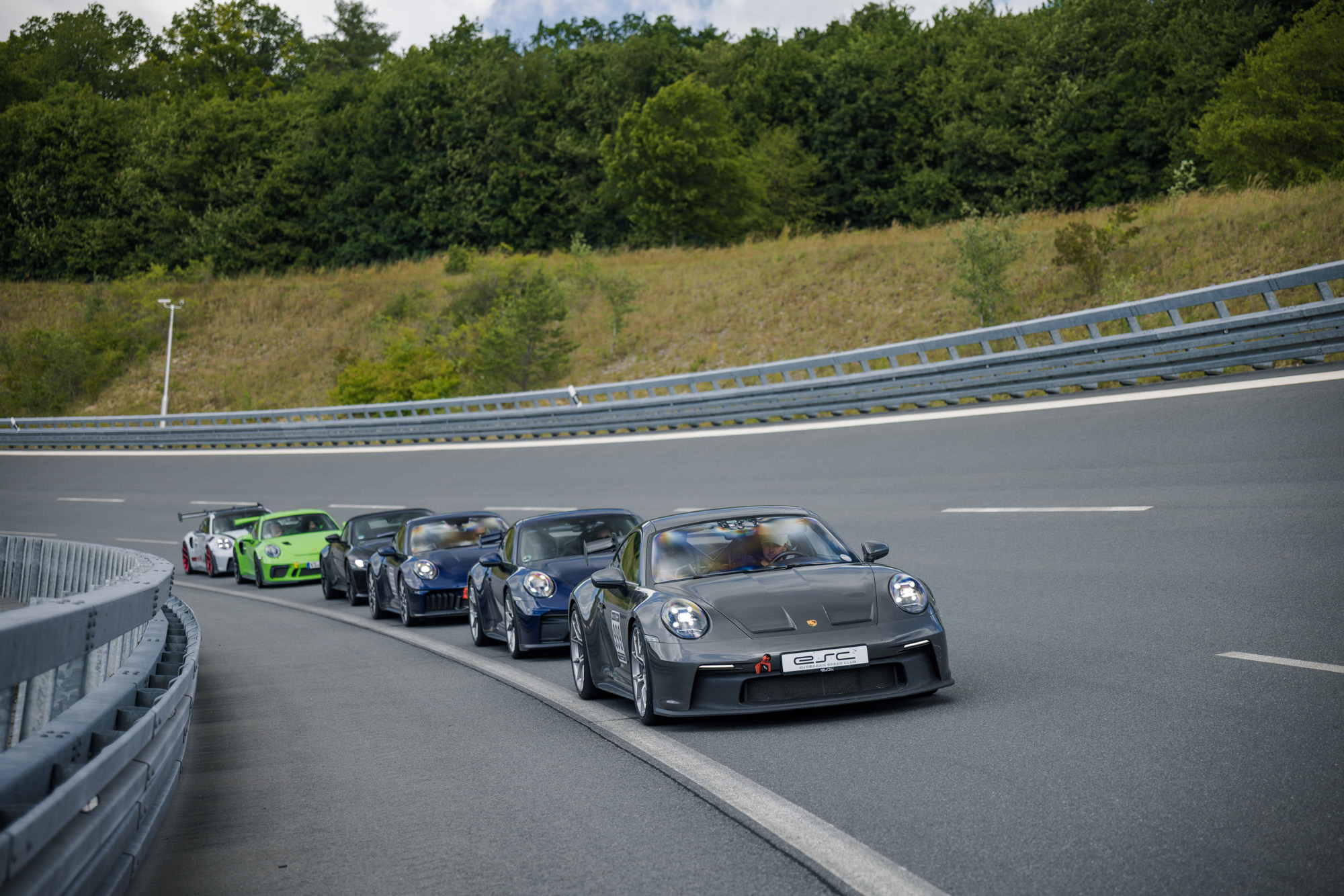
Nowhere else do so many serious race circuits sit so close together as in Germany — from the 20.8-kilometre Nordschleife to the proving-ground oval at Boxberg. If you are after a list of the best race circuits in Germany, you will find plenty of them online. The problem: most are copied straight out of Wikipedia. Track length, number of corners, year of opening — and nobody who has ever driven a lap there.
We have. The European Speed Club runs its trackdays on exactly the circuits covered here: Nürburgring and Nordschleife, Hockenheimring, Bilster Berg, Boxberg, Salzburgring, Red Bull Ring. That is why this guide tells you not only how long a circuit is, but where it gets tight, where you need nerve and which driver level it suits. And under every profile we link the matching, bookable ESC trackday — not an anonymous price bracket, but a specific day with coaching.
→ All ESC trackday dates at a glance
Race circuits in Germany & Austria at a glance
A permanent race circuit is a purpose-built, permanently licensed track with its own infrastructure (pits, run-off areas, safety installations) — as opposed to temporary street courses such as the Norisring. This overview shows the permanent circuits ESC drives, with their key data and the driver level they suit:
- Nürburgring Nordschleife — Eifel, 20.8 km, 73 corners. Character: extremely demanding, blind crests, almost no run-off. Level: advanced to professional. ESC event: yes.
- Nürburgring GP circuit — Eifel, 5.1 km, 16 corners. Character: modern, clear, easy to read. Level: beginner to professional. ESC event: yes.
- Hockenheimring — Baden, 4.6 km, 17 corners. Character: high-speed straights plus the tight Motodrom. Level: beginner to advanced. ESC event: yes.
- Bilster Berg — East Westphalia, 4.2 km, 19 corners, 70 m of elevation change. Character: private, tight, plenty of blind corners. Level: advanced to professional. ESC event: yes.
- Boxberg — Baden-Württemberg, Bosch proving ground. Character: high speed, generous safety margins. Level: beginner to advanced. ESC event: yes.
- Salzburgring — Salzburg (AT), 4.2 km, 13 corners. Character: fast, flowing, few braking points. Level: advanced. ESC event: yes.
- Red Bull Ring — Styria (AT), 4.3 km, 10 corners. Character: modern, plenty of elevation, GP-grade. Level: beginner to professional. ESC event: yes.
The Salzburgring and the Red Bull Ring are in Austria, but for any serious driver from the German-speaking region they belong on the list — and ESC drives them. Below we go through each circuit in turn.
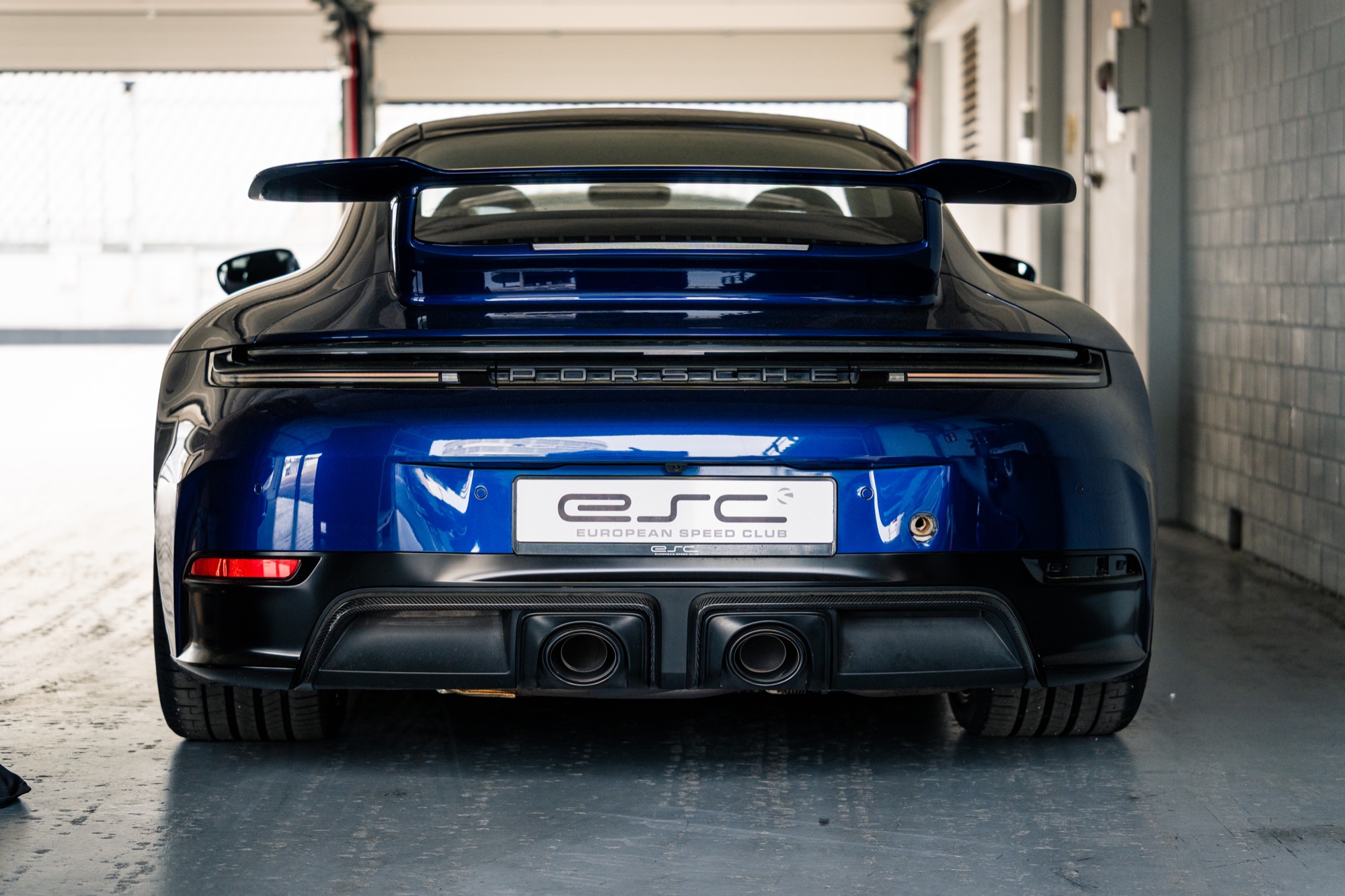
Nürburgring & Nordschleife — the Green Hell
The Nordschleife is the most demanding permanent race circuit in the world: 20.8 kilometres, 73 corners, more than 300 metres of elevation change. Jackie Stewart christened it the Green Hell, and the name still fits. What makes the circuit so hard is not individual corners but the sheer length and the many blind crests — you drive towards places whose exit you only see once you are already in them. Here track knowledge counts for more than bravery.
Which is exactly why you do not take on the Nordschleife cold. At ESC you normally start on the Nürburgring GP circuit — modern, easy to read, ideal for learning the racing line — and work your way up to the Nordschleife. Alongside you are coaches who do not just know the 24-hour race here, they have won it (more on that below).
→ ESC trackday at the Nürburgring
Hockenheimring — high-speed straights meet the Motodrom
The Hockenheimring is the most approachable of the big German race circuits. 4.6 kilometres with two faces: long high-speed straights at the front, the tight, technical Motodrom at the back. That makes it ideal terrain for practising braking and cornering speed separately — on the straight you find out what your car can do, in the Motodrom you learn precision. Because the run-off areas are generous and the circuit is easy to read, Hockenheim suits your first or second trackday well. What an ESC day here actually involves is set out in the Hockenheimring trackday guide.
Bilster Berg — the German rollercoaster
Bilster Berg is a purely private circuit in East Westphalia, opened in 2013. 4.2 kilometres, 19 corners, 70 metres of elevation change in the tightest of spaces — hence the nickname rollercoaster. No grandstands, no long straights, but blind corners, compressions and dips that briefly turn your stomach. This is drivers' terrain, not a beginners' playground: anyone who wants to be clean here should bring track experience and listen to a coach who knows the place. That mix of difficulty and privacy is exactly what makes Bilster Berg one of the most appealing ESC events.
Boxberg — the high-speed proving ground
At heart, Boxberg is a Bosch proving ground — built to test cars at the limit, not to entertain spectators. For you that means plenty of tarmac, plenty of safety margin, a high-speed oval and handling courses. You can explore your car's behaviour at the limit here without a barrier waiting just beyond the corner — that takes the pressure off and makes Boxberg ideal for building speed. ESC drives there regularly. What defines the day and who it suits is set out in the Boxberg trackday guide.
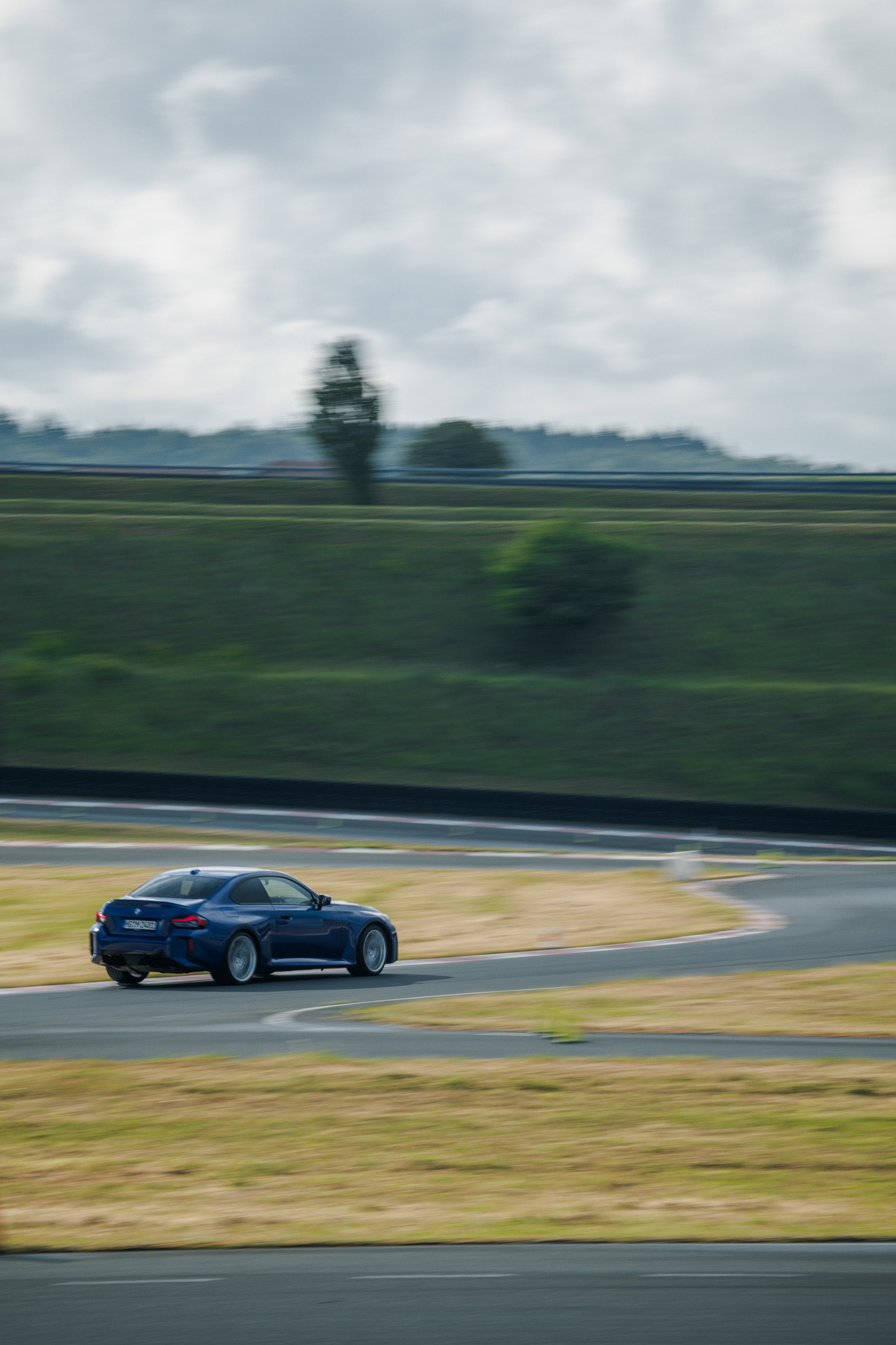
Salzburgring — fast and flowing in the Alps
The Salzburgring lies just under an hour's drive beyond the Bavarian border and is one of the fastest circuits on the programme: 4.2 kilometres, only 13 corners, many of them flat out. The character is flowing rather than angular — few hard braking points, but long sweeping corners in which you learn to trust the car. Set between rock faces, it also has a backdrop no flatland German circuit can offer.
For the German-speaking region the Salzburgring is very much part of the picture, and ESC drives it as part of its circuit programme.
→ ESC dates at the Salzburgring
Red Bull Ring — a modern GP circuit with a mountain backdrop
The Red Bull Ring in Styria is the most modern circuit in this overview: 4.3 kilometres, only 10 corners, but a great deal of elevation and a layout Formula 1 races on. Short, sharp, with long uphill sections and braking points at the top of crests — a circuit where rhythm is everything. Because it is easy to read and safely laid out, it suits beginners just as well as experienced drivers.
→ ESC dates at the Red Bull Ring
Which race circuit suits you?
The short version by driver level:
- Beginner: Hockenheimring, Nürburgring GP circuit, Boxberg or Red Bull Ring — easy to read, plenty of run-off, ideal for learning the racing line.
- Advanced: the first laps towards the Nordschleife — fast, flowing corners in which you build cornering speed.
- Professional: Bilster Berg and the Nordschleife — blind corners, elevation, almost no run-off. Track knowledge is what counts here.
Whatever your level, an ESC trackday follows the same principle: you drive in groups that match your ability — STARTER to build up, EXPERT for the quick laps. A coach is with you the whole time, from the briefing to the debrief. And you do not have to worry about organisation, catering or the running order — that is normally included in the day.
What this means for you: you pick the circuit to match your level — and get the same support on every one of them. Instead of anonymously renting track time, you drive a structured day with coaching, in groups that suit you.
Why go on track with ESC
The difference between an ESC trackday and rented track time comes down to three things no magazine listicle can offer:
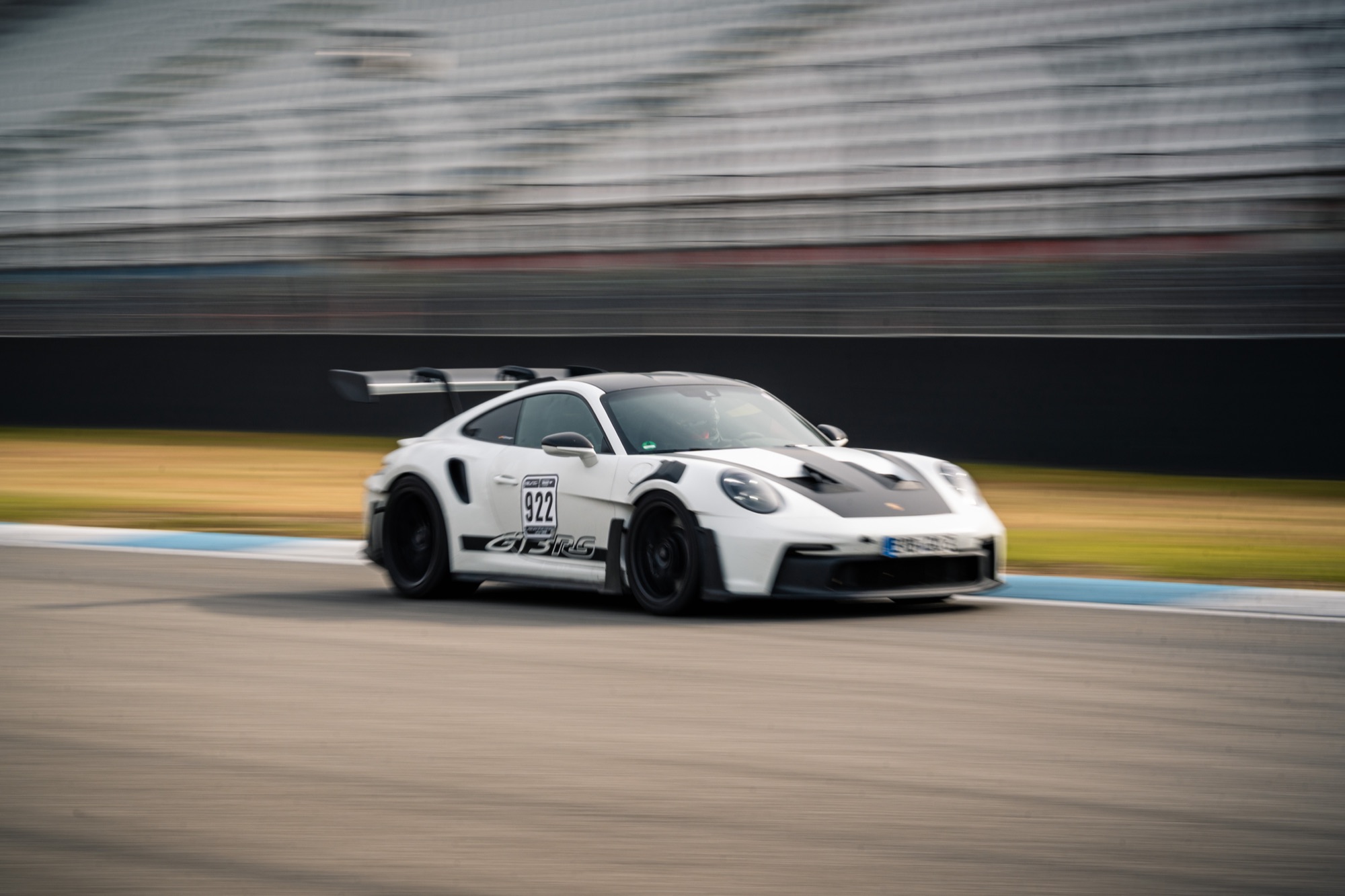
- A real fleet: ESC provides sports cars up to the 911 GT3 or the GT4 Clubsport race car — prepared, normally insured, ready for the circuit.
- Coaches who have won here: your instructors are Nürburgring 24-hour winners and GT champions — among them Pierre Kaffer (Nürburgring 24-hour winner, Le Mans class winner), Marc Basseng (FIA GT1 world champion, Nürburgring 24-hour winner) and Luca Ludwig (two-time ADAC GT Masters champion). You learn from people who know these circuits at racing pace.
- Supervised trackdays instead of anonymous track hire: briefing, groups by level, coaching out on track, debrief afterwards — not a free-for-all, but a properly planned day.
What that feels like is best told by the people who have already been there — have a look at what our participants say.
Sources & currency note
The circuit data (length, number of corners, elevation change) follows the figures published by the respective circuit operators. The assessments of character and driver level are based on the experience of ESC coaches and participants on these circuits.
All information without guarantee. As of June 2026. Circuit data and dates are subject to change — current ESC dates can be found in the event calendar.
Frequently asked questions about race circuits in Germany
The Hockenheimring, the Nürburgring GP circuit, Boxberg and the Red Bull Ring all suit a first trackday. They are easy to read, have generous run-off areas and let you learn the racing line without immediate consequences. ESC runs trackdays on all four.
Not straight away. With 20.8 kilometres, 73 corners and a great many blind crests, the Nordschleife demands track knowledge above everything else. At ESC you normally start on the GP circuit and work your way up to the Nordschleife alongside a coach who knows it at racing pace.
A permanent circuit is purpose-built and permanently licensed, with its own pits, run-off areas and safety installations — the Hockenheimring or Bilster Berg, for example. A temporary street course such as the Norisring is laid out on public roads for a single event and dismantled afterwards.
Yes. Both circuits are in Austria but sit within easy reach of southern Germany, and ESC runs events on them. The Salzburgring is fast and flowing with only 13 corners; the Red Bull Ring is a modern Grand Prix layout with a lot of elevation change.
4.2 kilometres, 19 corners and 70 metres of elevation change packed into a very small area. Blind corners, compressions and dips follow one another with no long straight to recover on. It is a circuit where track experience and a coach with local knowledge make a real difference.
Still have questions?
Contact our team — we'll help you find the right cover for your next track day. Or sign up for our exclusive ESC newsletter and stay up-to-date!