



Driving a Race Car or Sports Car Yourself on a Race Circuit

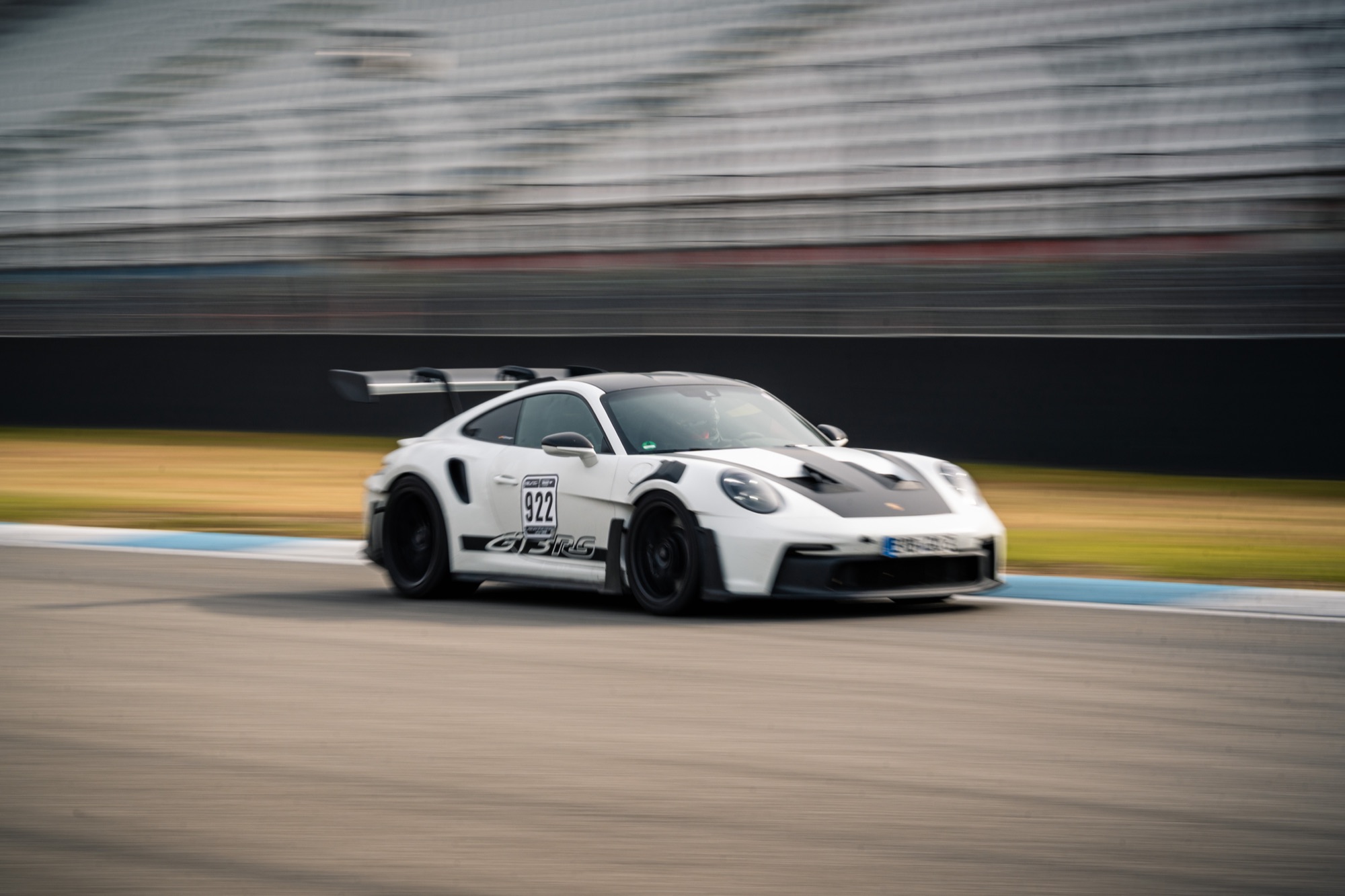
You want to drive a race car or sports car yourself — on a real circuit, behind the wheel, not in the passenger seat. At ESC that means: you drive, a racing instructor coaches you, and you have the circuit to yourself with 20 to 40 cars at a time rather than a full grid. The first decision you make is your own car or a hire car. That is exactly the question we answer honestly here.
Driving a race car yourself on a circuit — what that means at ESC
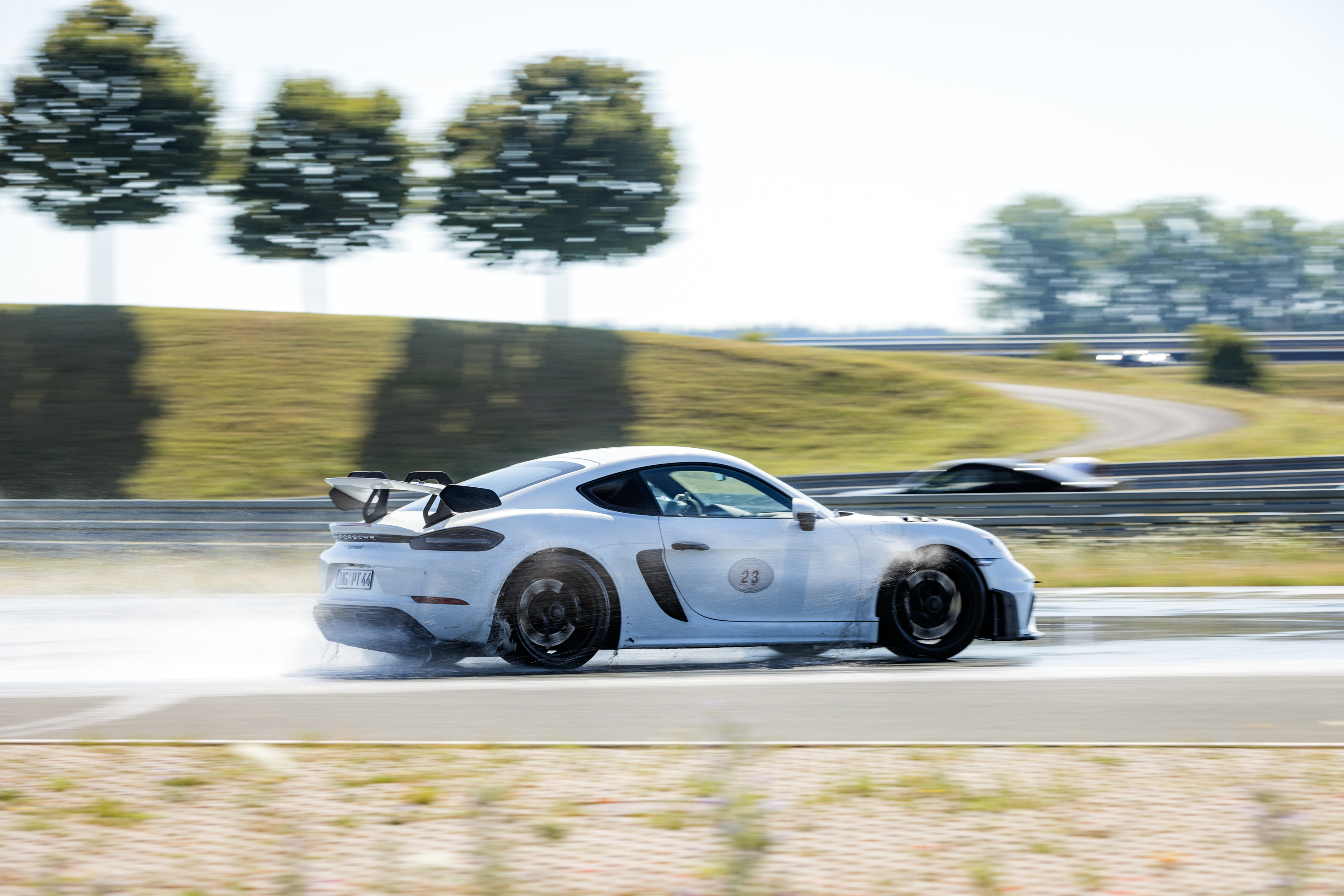
Driving yourself on a race circuit means you are behind the wheel driving the car while an experienced instructor coaches you lap by lap. You learn the racing line, braking points and turn-in points on the real circuit, not in a simulator. That is the clear difference to a racing taxi, where a professional drives and you ride along on the right.
You do not need a racing licence for it. A valid driving licence and a willingness to engage with the pace are enough. The coaching builds everything else — from your first controlled braking point to a clean line through the fast sections.
Driving yourself or a racing taxi? The difference, honestly explained
Both options take place on the same circuit, but they answer different wishes.
- Driving yourself: you are the driver. You brake, steer and accelerate. The instructor coaches you live and you take measurably better laps home with you. That suits you if you want to learn something yourself and shift your own ability.
- Racing taxi: a professional racing driver is at the wheel, you sit on the right and experience racing pace at close quarters — with no responsibility on the steering wheel. That suits you if you want the experience without driving yourself, or if you are giving it as a gift.
You do not have to commit to one. Many drivers combine both: first feel how quick the circuit really is from the racing taxi, then take the wheel yourself and build up to the pace step by step.
Taking your own car on track — when that is the right choice
Bringing your own car onto the circuit makes sense when you want to get to know that particular car better or take it to the limit — a sports car, your Porsche, your GT. You drive a familiar car and take the experience back onto the road with you.
What your car needs for that:
- a technically faultless condition, sound brakes and tyres with enough tread
- enough brake pad material and fresh brake fluid — on track the brakes are worked far harder than in everyday use
- nothing loose in the cabin
The honest downside: trackday miles cost consumables. Brakes and tyres wear faster, and if the worst happens you are driving your own car, which is often not fully covered. Anyone who does not want to expose their car to that risk is better off in a hire car.
No car of your own? The CarForGo hire car programme from ESC
If you do not have a suitable car, or you do not want to take your own onto the circuit, ESC runs the CarForGo programme: a hire car you book for the trackday and hand back at the end of the day. You drive a car prepared for the circuit without having to worry about preparation, wear on your own car or transport.
CarForGo is run by Elia Erhart, himself a Nürburgring 24-hour competitor and an ESC instructor. So you have a contact who knows the circuit at racing pace and understands exactly what matters in a trackday car.
What this means for you: you can drive yourself on a race circuit without owning a suitable car of your own — and without exposing your everyday car to the wear. That choice is exactly what makes getting started easier.
Your own car vs a CarForGo hire car — the decision at a glance
Which option suits you comes down to four points: cost, risk, effort and experience.
- Cost: your own car — no hire charge, but you carry the wear on tyres and brakes yourself. CarForGo — a fixed price for the hire car, with wear already accounted for.
- Risk: your own car — in the event of damage it is your car that suffers. CarForGo — you drive a car that is intended for track use.
- Effort: your own car — preparation, the journey there and the technical check are down to you. CarForGo — the car is waiting on site.
- Experience: your own car — you get to know your particular car much better. CarForGo — you drive a track-capable car without worrying about your own.
In short: your own car if you want to take that specific car to the limit and accept the consumables question knowingly. CarForGo if you want a clear head.
How your day on the circuit runs
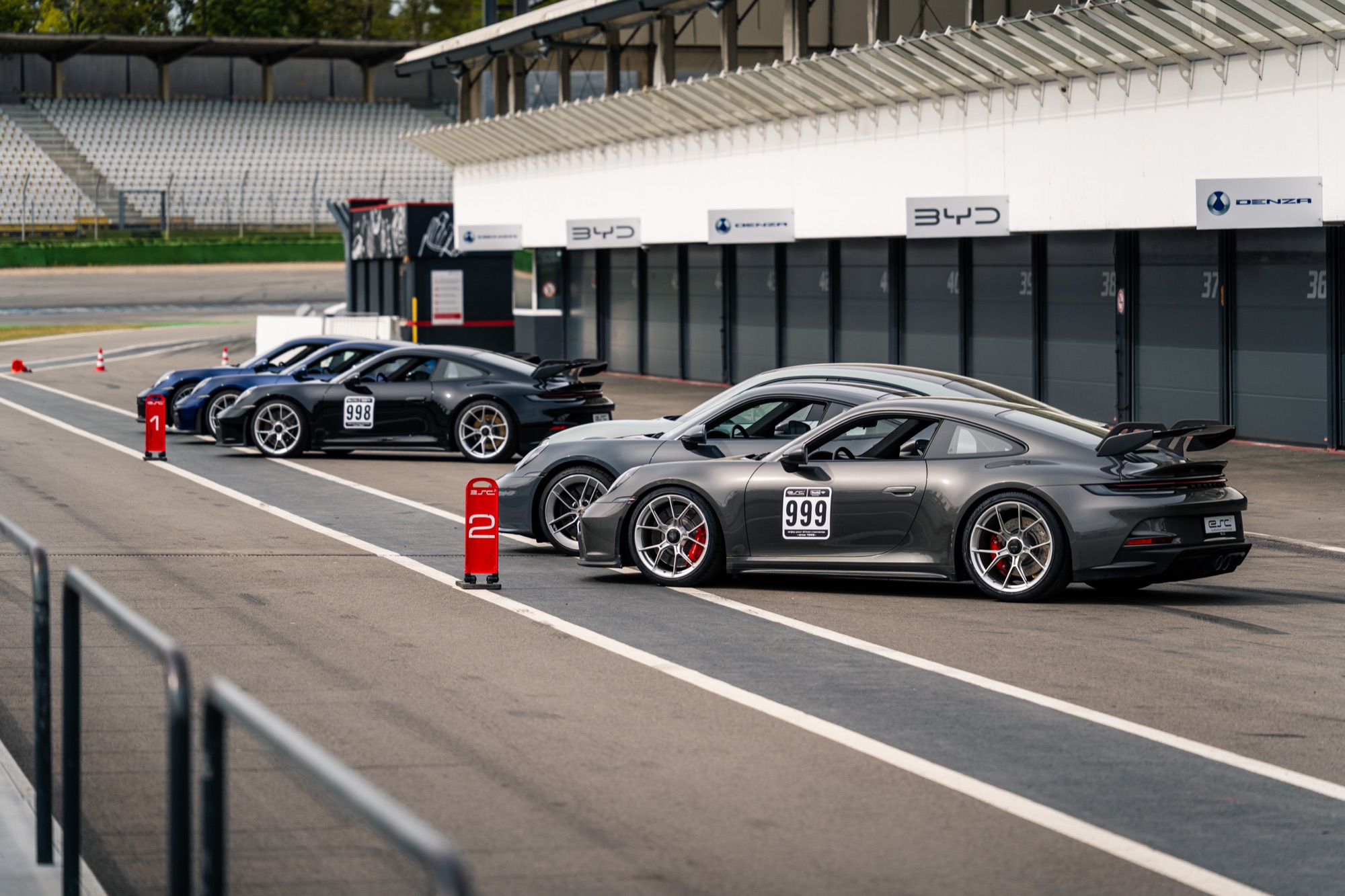
An ESC trackday is structured so that you drive safely and make progress — not as a chaotic flat-out event.
- Briefing: circuit layout, flags, rules of conduct and the running order, before you go out on track.
- STARTER and EXPERT groups: you drive with people at your level, not in the middle of the quickest field.
- Sessions: you drive in timed sessions, with breaks to take it in and for feedback.
- Coaching: an instructor works with you and targets your weakest points specifically.
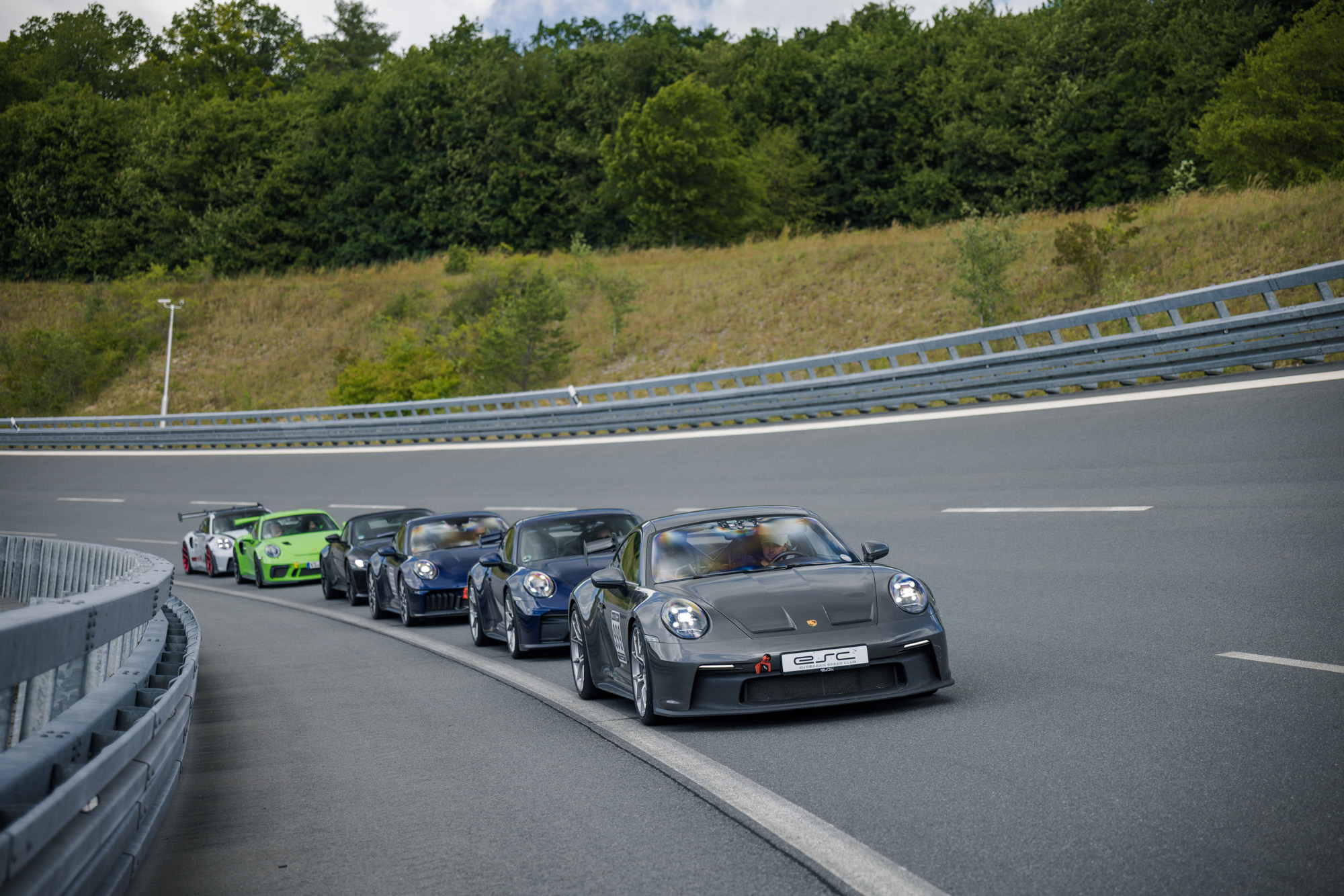
- Open track: 20 to 40 cars on the circuit at a time instead of a full grid — more space, more clean laps.
Current dates can be found in the event calendar.
Who is driving yourself on a race circuit for?
Driving yourself on a circuit suits beginners just as well as experienced drivers — what matters is the right group and the right coaching. As a beginner you start in the STARTER group and build pace under control. Experienced drivers work on details and the last tenths in the EXPERT group.
What you should bring:
- a valid driving licence
- a willingness to follow the briefing, the flags and the instructors' directions
- an open mind for the coaching — the quickest progress goes to those who listen rather than just press on
Safety and instructors — who coaches you on track
What separates this from a pure experience provider is the people sitting next to you. At ESC you are coached by drivers who compete at racing pace, not just in theory:
- Pierre Kaffer — Nürburgring 24-hour winner 2019, Le Mans class winner, more than 20 years of professional motorsport.
- Marc Basseng — FIA GT1 world champion, Nürburgring 24-hour winner, 26 outright NLS wins.
- Luca Ludwig — two-time ADAC GT Masters champion, Nürburgring 24-hour class winner.
- Elia Erhart — Nürburgring 24-hour competitor and the man responsible for the CarForGo programme.
On top of that comes the safety concept: a briefing before every run, separate ability groups, timed sessions and a circuit that is not overcrowded with cars. More about our coaches and the coaching can be found on the coaching page.
Which race circuits you can drive yourself with ESC
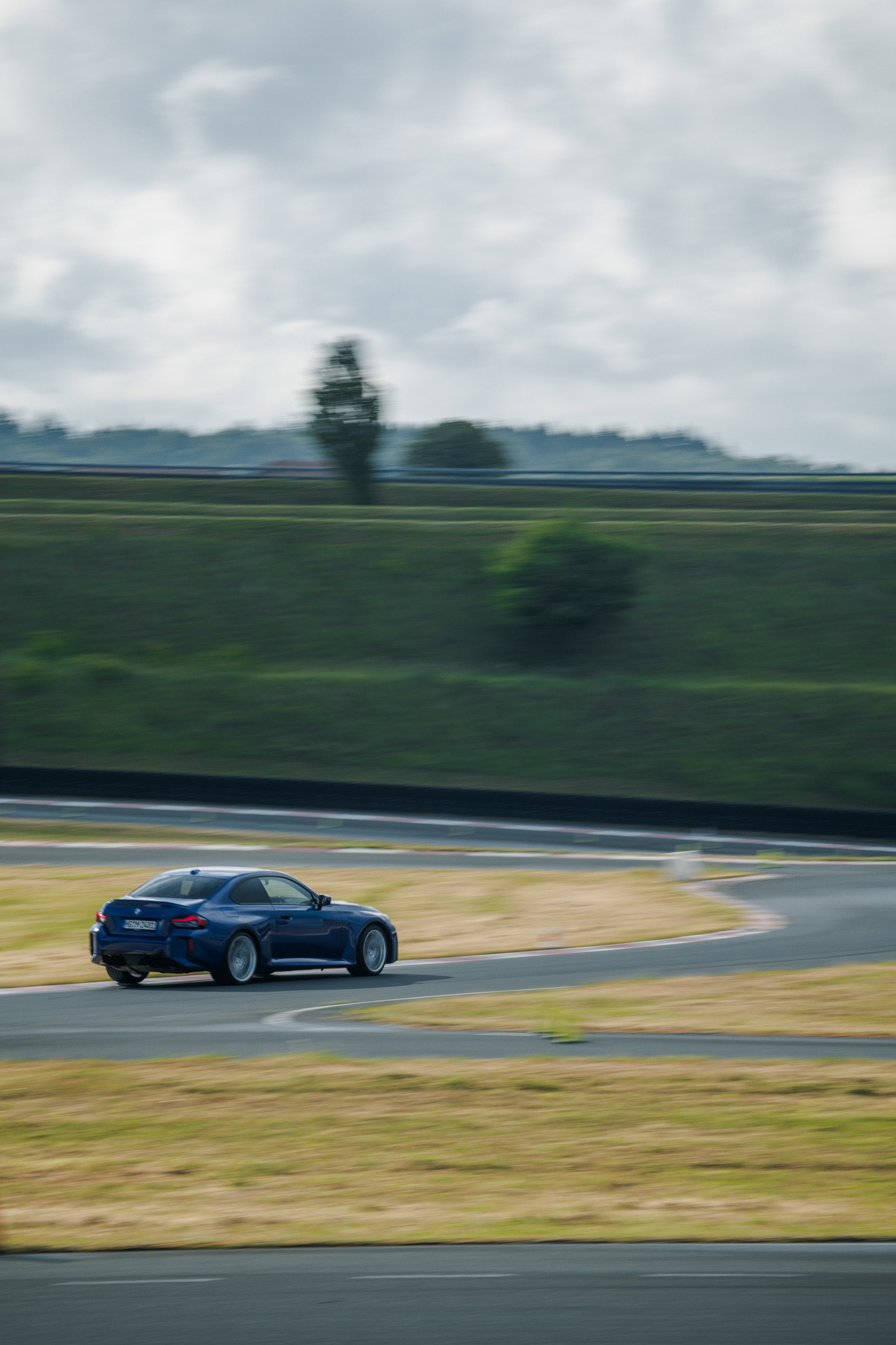
ESC drives established German race circuits — each with its own character:
- Hockenheimring: a Grand Prix course with long straights, hard braking zones and the famous Motodrom — a classic for clean work on the line.
- Boxberg: a protected proving ground with plenty of space, well suited to building pace under control.
- Nürburgring / Nordschleife: 20.8 kilometres, 73 corners, the most demanding circuit in the world — the GP course and the Green Hell.
Which circuit is coming up when can be seen in the event calendar.
Frequently asked questions about driving a race car or sports car yourself
No. A valid driving licence is enough for an ESC trackday, together with a willingness to follow the briefing, the flags and the instructors' directions. Everything else is built up through coaching, from your first controlled braking point to a clean line through the fast sections.
Driving yourself means you are at the wheel while an instructor coaches you lap by lap. In a racing taxi a professional drives and you ride in the passenger seat. Both take place on the same circuit — one develops your own ability, the other delivers the experience without responsibility at the wheel.
A technically faultless condition, sound brakes, tyres with enough tread, sufficient brake pad material and fresh brake fluid. Nothing should be loose in the cabin. Track use loads the brakes far harder than everyday driving, so pads and fluid are the points that matter most.
CarForGo is the ESC hire car programme: you book a car prepared for the circuit for your trackday and hand it back at the end of the day. It makes sense if you have no suitable car, or if you do not want to expose your own to the wear and the risk. It is run by Elia Erhart, a Nürburgring 24-hour competitor and ESC instructor.
Between 20 and 40 cars, split into STARTER and EXPERT groups and driving in timed sessions rather than as a full grid. That keeps the circuit open enough for clean laps and means you drive with people at your own level.
Still have questions?
Contact our team — we'll help you find the right cover for your next track day. Or sign up for our exclusive ESC newsletter and stay up-to-date!