





Track Day Preparation: Getting Your Sports Car Ready for the Circuit
The track day is booked, the circuit is set and your sports car is waiting in the garage. One question still matters: is the car merely road-worthy, or genuinely ready for several fast sessions on a race track?
Track day preparation is about making sure tyres, brakes, fluids and every safety-relevant component can cope with the far higher loads on track. Plan this properly and you protect more than the car. You protect your most valuable resource on the day: track time.
This track day checklist covers what to inspect before you set off, what matters during the event and when a professional track day service is worth it.
Why a track day asks more of your car than the road
In everyday traffic, load and recovery alternate constantly. On a race track, hard braking zones, fast corners and heavy acceleration follow one another again and again. Temperatures rise in the tyres and the brake system, while suspension, fluids and drivetrain work far harder for far longer.
A road car with no obvious faults is therefore not automatically ready for several fast stints. What counts is not only whether a component still works today, but whether its condition and specification suit the car, the circuit, the weather and your intended pace.
Put simply: track-ready does not mean heavily modified. It means checked, durable and prepared for the job at hand.
Track day checklist: what to inspect before you set off
A lot of this you can see yourself. For everything else: call in at, or ring, the authorised workshop for your make, for example the Porsche Centre near you. They know your model from the factory, they have its history and they can advise you well. If the car is going in for a service anyway, mention the planned track outing straight away.
1. Tyres and wheels

Tyres are the only connection between car and asphalt. So check more than the visible tread. Look at the inner and outer shoulders for uneven wear, cracks, embedded objects or other damage. Age, previous load and the tyre's suitability for the planned use belong in the assessment too.
Wheels, valves and wheel fastenings should also be inspected before the event. When tightening wheels, the vehicle manufacturer's specifications always apply.
There is no universal tyre pressure that fits every car. Start from the manufacturer's cold pressures and take the tyre maker's track recommendations into account as well. Because pressure rises with temperature, it should be measured again after the first sessions and adjusted properly. After the track day, cold pressures are returned to the specified road values before you drive home.
2. Brakes

Few components feel a track as directly as the brake system. Pads and discs need sufficient reserves and must be free of obvious damage. The condition and specification of the brake fluid matter just as much, along with a check of lines and fittings.
Whether the standard system is enough depends on the car, the tyres, the circuit, your driving style and the length of the sessions. Blanket statements help little here. If you are unsure, notice unusual noises or can already see little material left, have the system checked professionally before the event rather than on the morning in the paddock.
3. Fluids and engine bay

Check engine oil, coolant and brake fluid to the manufacturer's specification. Also look for visible leaks, damaged hoses, loose covers and warning messages in the car. Fluids should be neither overfilled by feel nor replaced with unsuitable products.
One point matters especially: if a warning already appears on the road, the cause belongs sorted before the track day. A race track is not the place to find out whether a known problem might be harmless after all.
On the day itself you are not left alone with this. At ESC track days the small pit-stop service normally comes at no extra charge: adjusting tyre pressures, checking oil and coolant on request, and keeping the glass clear.
4. Suspension, steering and underbody

Play in the steering or wheel suspension, unusual noises, vibrations and damaged underbody or aerodynamic parts should be checked before the event. The same applies to visible damage on suspension components and wheel arch liners.
A track day check is particularly worthwhile if the car has stood for a long time, has recently been modified or has had no technical inspection since its last outing on track.
5. Interior and required equipment

Loose items quickly become a hazard under heavy braking. Clear out the interior and the boot, or secure everything reliably. Cameras, data loggers and mounts must be firmly fixed.
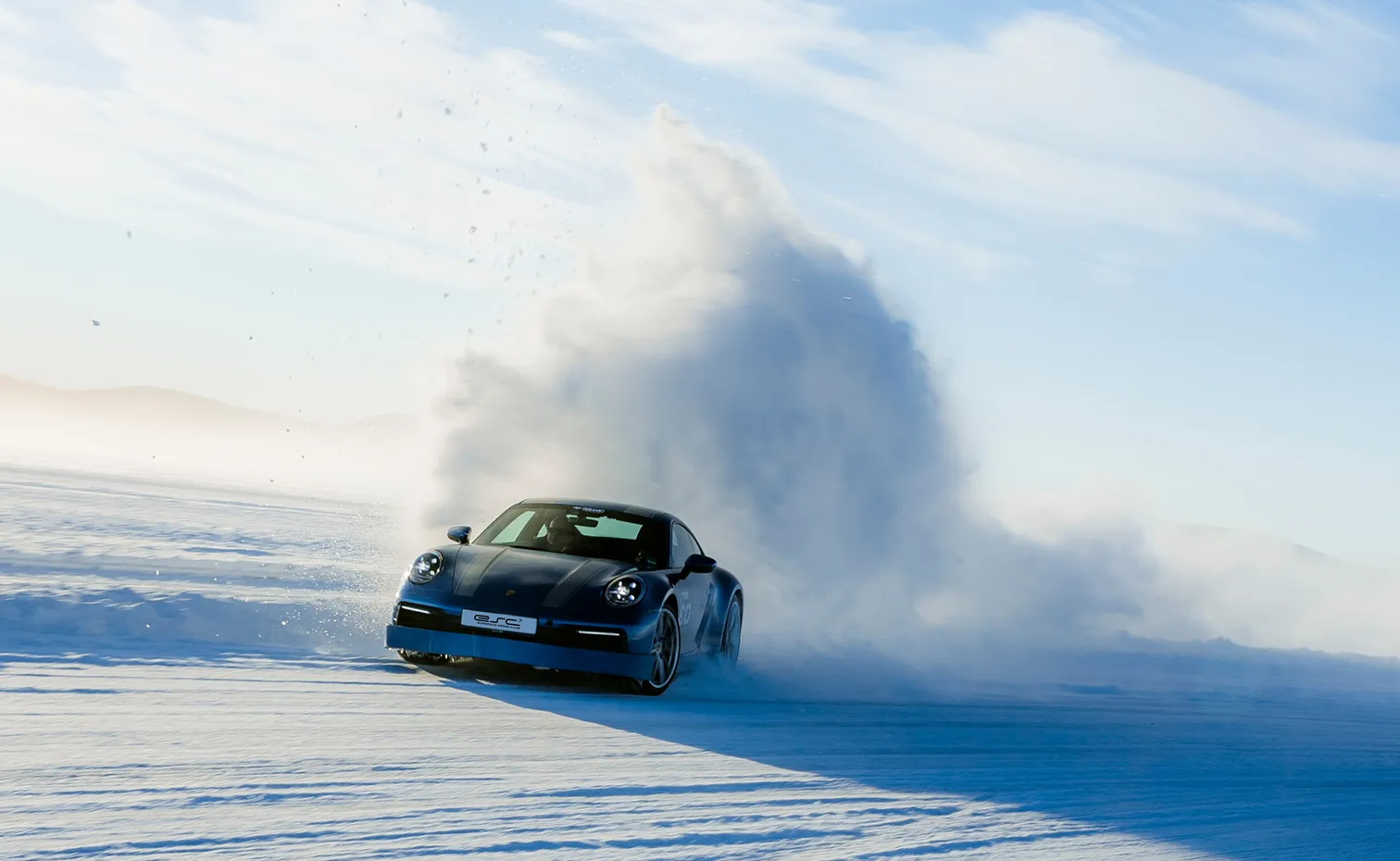
On a race track, helmets are mandatory at a track day. Driving without a helmet happens only where no race track is involved, so at driver training on a proving ground, at on-ice events and on Grand Touring. Beyond that, check the organiser's and the circuit's requirements for tow eyes, clothing, noise limits and further equipment. These requirements differ from date to date, and the event documentation always takes precedence.
When should you start preparing?
Good track day preparation does not begin the evening before you leave. Allow enough time so that tyres, brake parts or other components are still available if you need them.
The more valuable your booked track time and the longer the journey, the less it pays to leave open technical questions until the day of the event.
Discover all ESC track days across Europe
When should you talk to professionals?

Not every preparation calls for a major build. Professional support is especially worthwhile when you cannot judge current wear with confidence, when tyres or brakes need replacing, when the car is used on track regularly or when a long journey is ahead.
Your first port of call can be your authorised workshop. A Porsche Centre or your manufacturer's service knows your car, has its history and will tell you what is due anyway. Servicing and work to manufacturer specification belong exactly there.
A good track day workshop looks at the car through the additional lens of track use. It takes into account the model, the tyres, the planned circuit, your experience level and how you intend to use the car. That combination of workshop knowledge and real race track experience is what makes the difference.
Paddock 7: from the workshop straight to the circuit
Paddock 7 is the in-house sports car service of the European Speed Club. The team looks after the ESC fleet professionally and sees these cars not only on the lift, but under real conditions at track days. What the team learns in use feeds directly back into preparation and support.
The aim is simple: you should be able to concentrate on driving while the technical and logistical tasks are organised to suit your car.
Vehicle preparation and track day check
Before the event, the relevant components are inspected and the necessary work agreed individually. Depending on the car and the job, that includes tyres, wheels, brakes and fluid levels among other things.
Tyre and wheel service

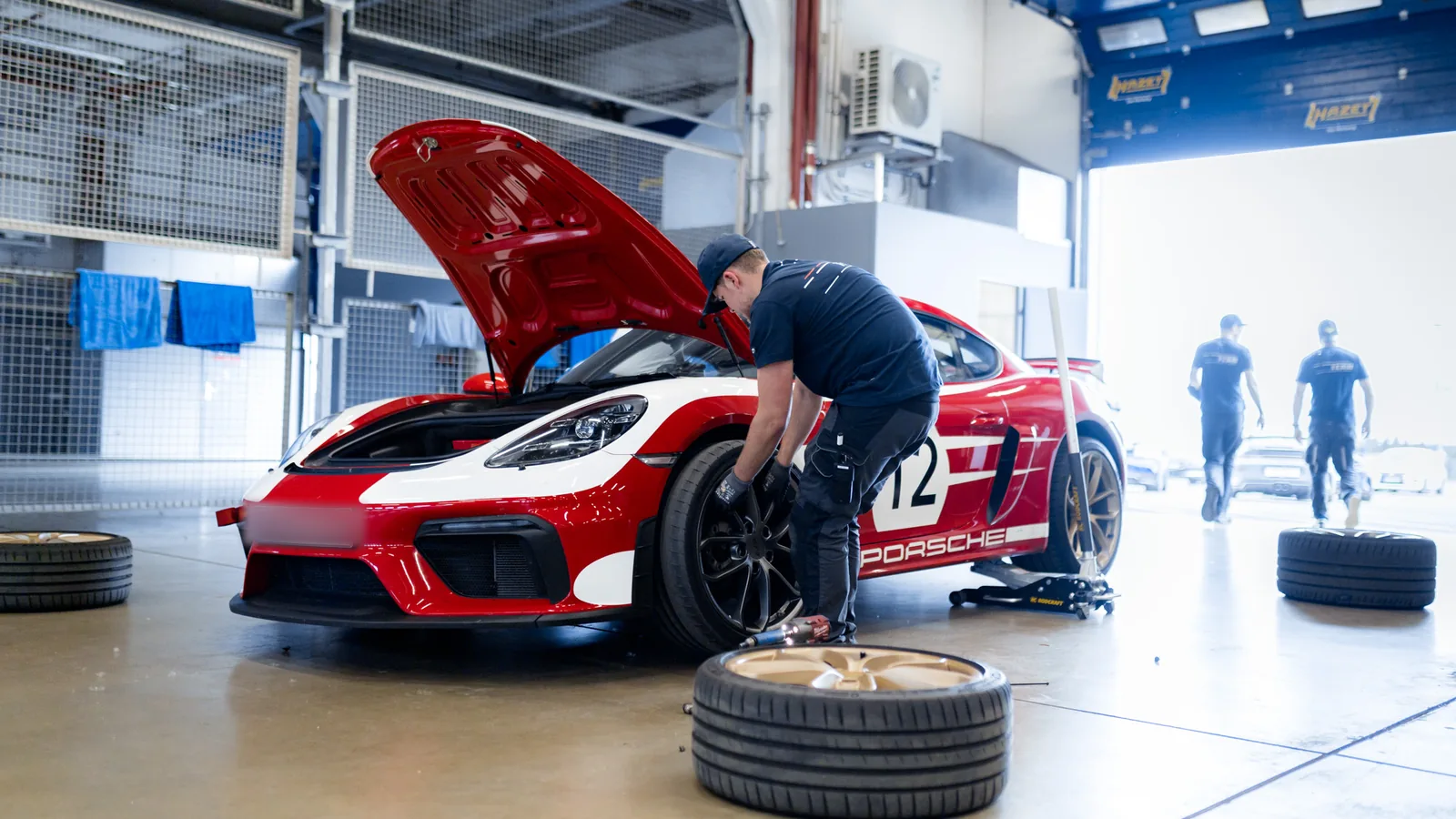
On request, Paddock 7 handles the transport of tyres and wheels to the circuit, wheel changes on site, tyre fitting including balancing, and storage between events. Scope and availability are agreed according to car, event and date.
Brake service
If the brake system no longer offers enough reserve for the planned use, replacing brake components on one axle or both can be arranged. Materials and scope are matched to the car.
Vehicle transport to the track day
Would you rather travel in comfort and take delivery of your sports car at the circuit? Paddock 7 arranges vehicle transport to track days in Germany and to selected European race tracks. Collection from your location can usually be arranged too. Additional tyres and wheels can be included in the planning.
Your own mechanic at the track

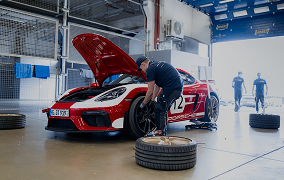
At selected events, a mechanic can look after your car on site. That gives you a technical contact between sessions who can react to agreed checks, tyre and wheel changes or questions about the car.
Services and materials at a glance
Which work and which materials are possible in a given case depends on the car, the date and availability. The overview below shows what is usually requested.
In the workshop
- Vehicle check and race track check before the event
- Brake service covering pads, discs and braided lines, including ceramic brake systems
- Tyre service with fitting and balancing, plus storage between events
- Oil changes and brake fluid changes
- Exterior and interior cleaning
At the track day
- A mechanic on site, by the hour or by the day, in Germany and elsewhere in Europe
- Transport of tyres and wheels to the circuit
- Wheel changes, including for wheels not held in storage with us
- Tyre changes including balancing
- Brake replacement on one axle or both
- Topping up fluids
- Exterior cleaning at multi-day events
Transport
- Transport out and back from Neu-Anspach to the circuits
- Collection from your location by arrangement
Download the service overview as a PDF. It also lists the common brake, wheel and tyre options. Prices are deliberately left out, we agree those to suit your car and your intended use and send you a quote. The document is in German.
The real premium service is not a single tyre change. It is the unbroken chain of preparation, transport and support at the track.
Enquire about the Paddock 7 sports car service
How the service works
What does technical support at the track actually give you?
A mechanic on site does not turn a track day into a risk-free event. What it can do is reduce avoidable downtime and spot technical changes between sessions early.
That is particularly valuable if you plan several stints, work with additional sets of wheels, face a long journey or would rather not deal with technical routines yourself on the day. Instead of hunting for tools, a pressure gauge or a helping hand, you have one dedicated contact in the paddock.
If you would rather not bring a car of your own at all, CarForGo is the alternative. The sports car is waiting for you, prepared, and the technical side stays entirely with us.
After the track day: the next outing starts with the last check
After the final session, tyres, brakes and the car deserve attention once more. Listen for new noises, watch for vibrations, warning messages, visible damage or fluid loss. Before the drive home, the car has to be safe for road use again. Correct cold tyre pressures are part of that.
With intensive use, a follow-up inspection makes sense. That way wear is not discovered shortly before the next event, and any necessary work can be planned without time pressure.
Why Paddock 7
What you really gain is time. You hand the car over and get it back prepared, instead of coordinating appointments, parts and transport yourself.
On top of that, it all runs from one place: preparation before the event, support in the paddock during it, the follow-up check afterwards. Where you would otherwise have three points of contact, here you have one.
That does not replace your authorised workshop. For manufacturer specifications, servicing and warranty questions it remains the right address. Paddock 7 starts where track use begins, and works with what your manufacturer requires.
Conclusion: good preparation buys track time
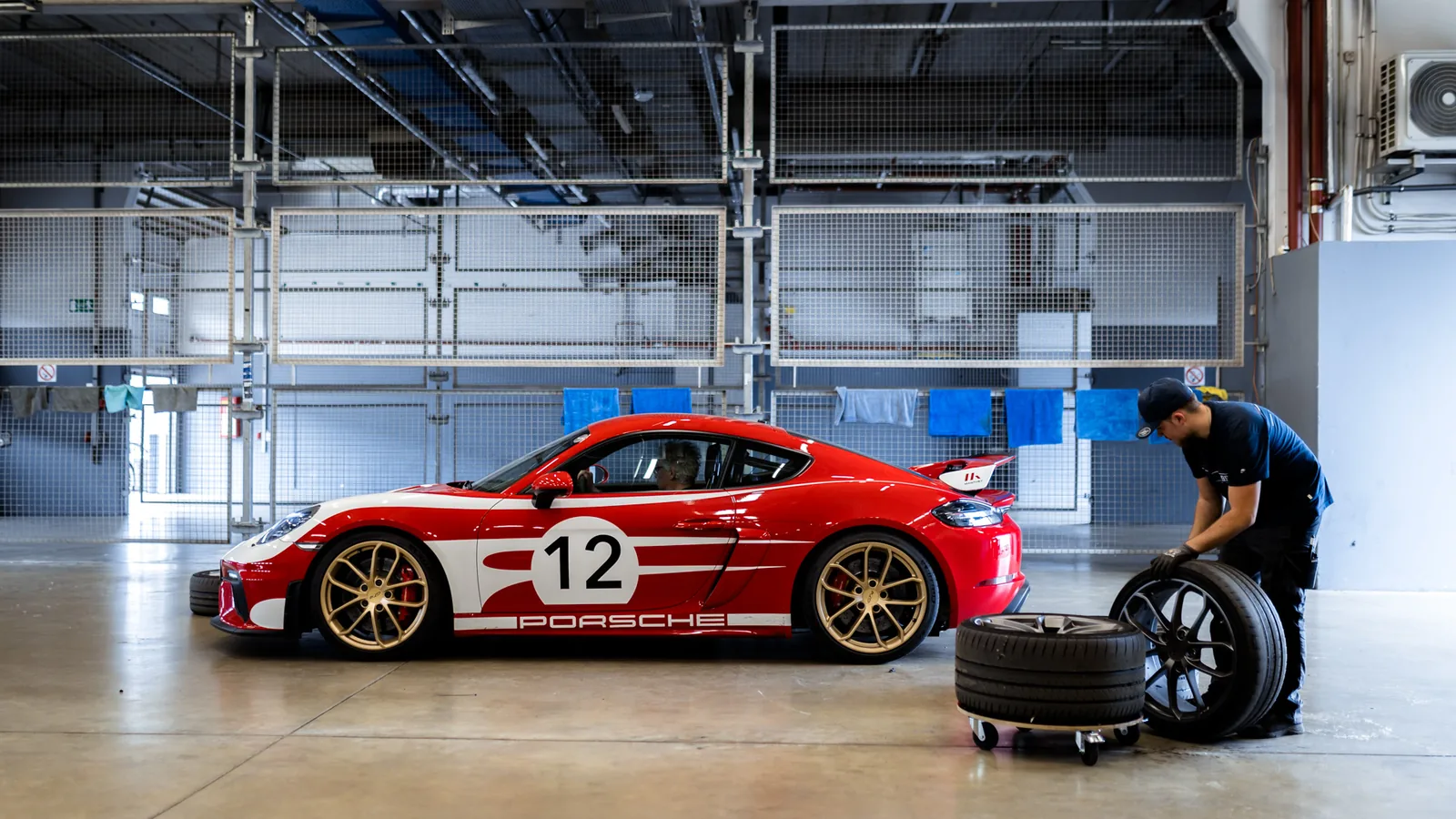
The best track day preparation feels unspectacular on the day itself. The car is checked, the tyres suit the job, the brakes have reserve and every logistical question is settled. That is exactly what leaves room for the part that matters: your laps on the circuit.
Paddock 7 combines workshop service, tyre and brake service, vehicle transport and technical support at the track. You decide whether you need a single service or full support.
Arrive. Get in. Drive. We take care of the rest.
Enquire about Paddock 7 for your next track day
No date booked yet? Discover ESC track days, or read the ESC track day guide first if you are right at the beginning.
The technical notes in this article are general and do not replace a vehicle-specific inspection. Manufacturer specifications, approvals and the rules of the respective organiser or circuit take precedence. The services, deadlines and cover that apply to your specific date are set out in the description of the individual event and in our terms and conditions, which take precedence.
Frequently asked questions about track day preparation
Check the tyres and wheels, the brake system, fluid levels, suspension and steering, and look for visible leaks. Clear loose items out of the interior and the boot. On a race track, helmets are mandatory at a track day. Also check the organiser's requirements for tow eyes, clothing and noise limits. If you are unsure, have the car inspected professionally in good time.
Ideally plan the technical check two to three weeks before the date. That leaves enough time to source the tyres, brake parts or other components you need. One to two days beforehand comes the final visual and fluid check.
Not necessarily. For newcomers, suitable road sports tyres in sound technical condition can be enough. What matters is the car, your pace, the weather and the event format. As experience grows, track-oriented tyres can start to make sense. Always follow the approvals and recommendations of the vehicle and tyre manufacturers.
There is no single value that fits every car. Start from the manufacturer's cold pressures and follow the tyre maker's track-specific recommendations. Check hot pressures after the first sessions and have them adjusted properly if needed. Before driving on the road again, cold pressures are returned to the specified road values.
Not every car needs a different brake system straight away. Pads, discs and brake fluid do have to be in good condition and suited to the planned load. What makes sense depends on the car, the circuit, the tyres, your driving style and the length of the sessions.
Yes. Paddock 7 offers vehicle transport to track days in Germany and to selected race tracks across Europe. Collection from your location and transport of additional tyres or wheels can usually be arranged. Scope and availability depend on the car, the event and the date.
Yes. The services are put together individually, from tyre or brake service through vehicle transport to technical support at the track. Scope and availability depend on the car, the event and the date.
Still have questions?
Contact our team — we'll help you find the right cover for your next track day. Or sign up for our exclusive ESC newsletter and stay up-to-date!