


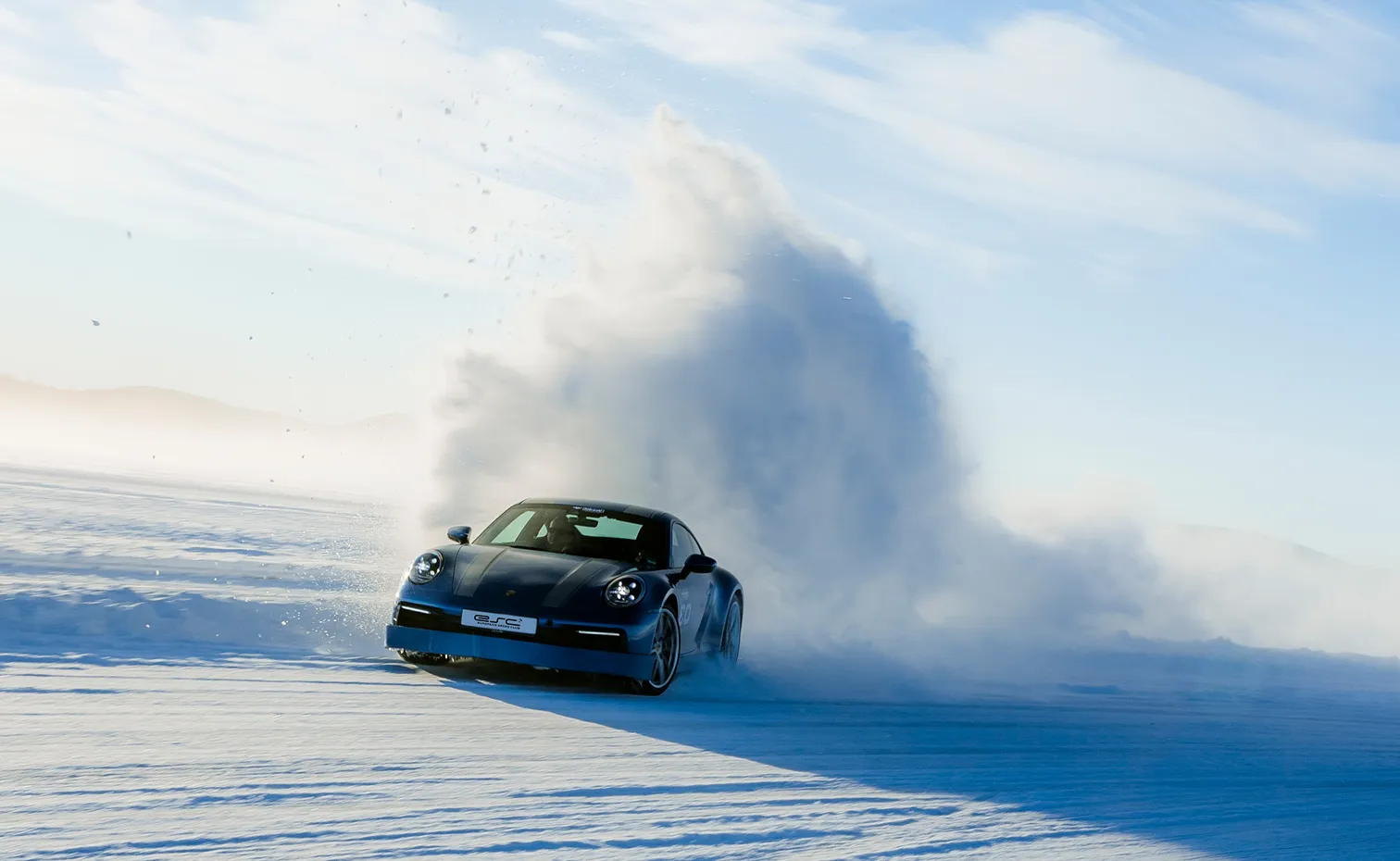


Oversteer

What is oversteer?
Oversteer happens when the rear tyres lose grip before the fronts. The rear steps out, the car rotates more than you asked for and, in the extreme, spins. Oversteer feels threatening at first, but with the right reaction it is very controllable. Drivers of rear-engined Porsches know the phenomenon well — it is part of the character of these cars.
Causes of oversteer
Oversteer has several causes: too much throttle mid-corner (power oversteer), an abrupt lift (lift-off oversteer), braking too late into the corner, or aggressive steering inputs. Rear- and mid-engined cars are more prone to it because more weight sits over the driven axle. Tyre wear, temperature and suspension setup also change the behaviour.
Catching oversteer
The instinctive reaction — more lock plus the brake — is wrong and makes things worse. The correct technique: countersteer into the slide and keep the throttle steady or ease off gently. Your eyes go where you want the car to go, not to the obstacle. Mild oversteer often needs only a small correction. Practice makes the difference — a driver who can catch oversteer is a better driver.
Understanding oversteer at ESC
Controlled oversteer is part of real car control — and it is fun. At ESC you learn in a safe environment how your Porsche reacts and how to stay in control. Ice driving in particular trains car control on a low-grip surface. Explore the limit with us — see the calendar for dates.