


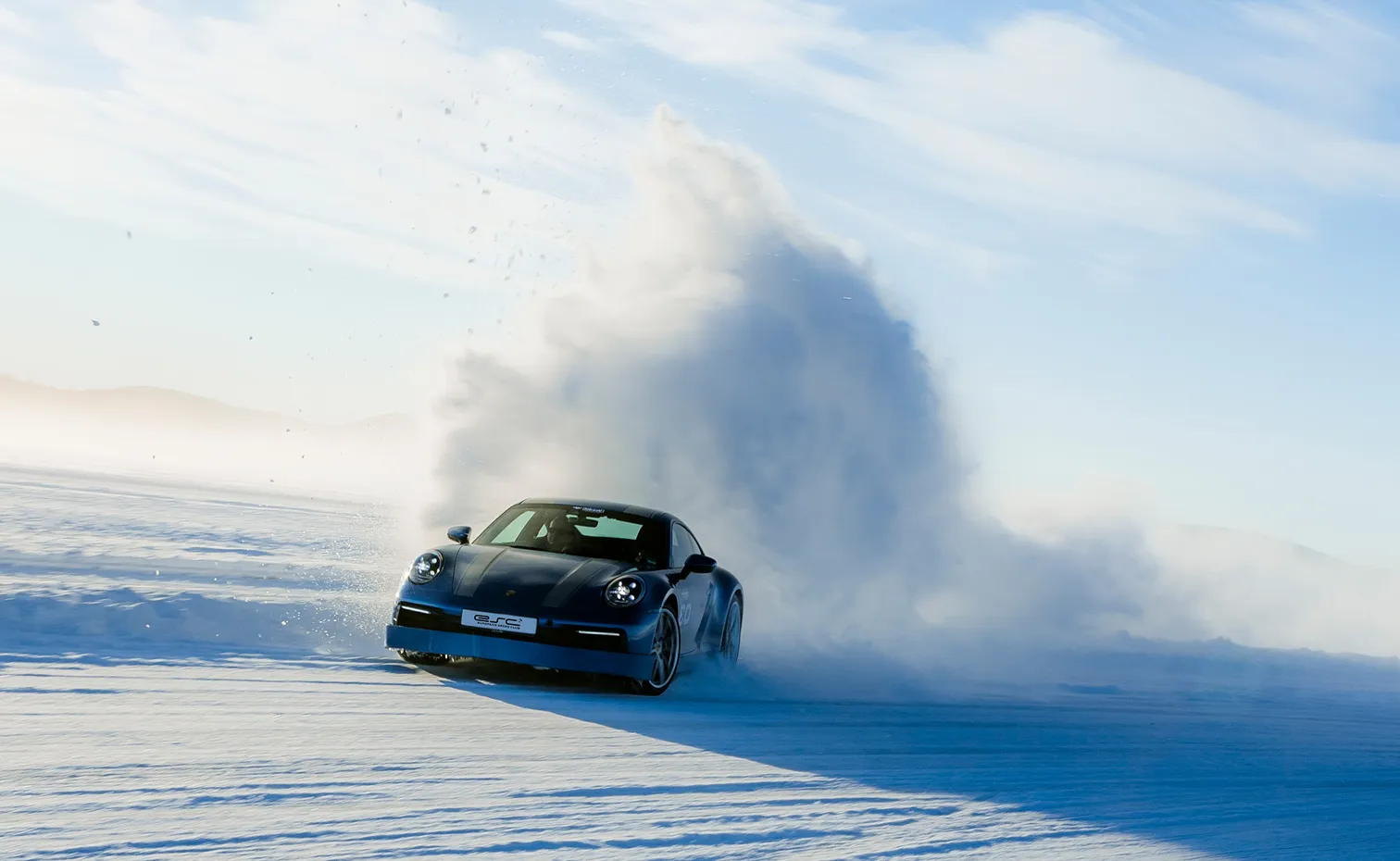


Lift-off Oversteer

What is lift-off oversteer?
Lift-off oversteer occurs when you come off the throttle abruptly in a corner. Weight transfers instantly from the rear axle to the front. The rear tyres lose grip, the back of the car goes light and steps out — the car oversteers. In rear-engined cars such as the Porsche 911 the reaction is especially pronounced, because a lot of mass sits behind the rear axle and acts like a pendulum.
The physics of load transfer
Under acceleration weight presses the rear down — maximum grip at the rear axle. Lift abruptly and the rear extends, the weight moves forward. The rear tyres suddenly have far less load and can no longer generate the lateral force they need. The rear overtakes the front and the classic spin begins. The more abrupt the throttle change, the more violent the reaction.
Controlling lift-off oversteer
The key is smooth transitions: never snap off the throttle, reduce it progressively. If the rear is already coming round, countersteer and hold the throttle steady, or even feed a little back in to settle the rear axle. Braking is counterproductive — it makes the weight transfer worse. Experienced 911 drivers even use a controlled lift to help the car rotate.
Typical Porsche behaviour at ESC
Lift-off oversteer is part of the character of the 911. At ESC you learn to work with it — our instructors have raced Porsches for decades and know every nuance. On an ice driving event you experience load transfer at low speed and without risk. Really understand your car.