



Trackday Germany 2026: The Complete Guide for Beginners & Advanced


Flooring the accelerator. Finding the ideal line. Learning the limits of your car – legally and safely. A trackday is more than just going fast. It's the moment you discover what your vehicle is truly capable of.
Many dream of driving on a race track but don't know where to start. Which organiser is right for me? Do I even need my own car? What does it all cost? And what if I've never been on a race track before?
This guide gives you all the answers. From the basics to costs and organizers – including how to get on track even without your own car. Whether you're a complete beginner or an experienced driver looking for new challenges – here you'll find everything you need to know for your next trackday in Germany.
→ Discover ESC Trackday dates 2026
What is a Trackday?
A trackday is not a race. There's no timing, no starting grid, no trophies. Instead, you get something far more valuable: time on a race track to discover your vehicle and your own abilities.
The difference from other driving experiences is crucial. On tourist laps at the Nordschleife, you're driving on a public toll road – with unpredictable other drivers and no guidance whatsoever. For real motorsport, you need a licence that requires months of preparation. And a classic driver safety training only scratches the surface of what your car can do.
A trackday typically starts with a thorough briefing. You'll learn everything about the track layout, flag signals and rules of conduct. Then it's out on track in groups – divided by experience level. Beginners drive with beginners, advanced drivers among themselves. This prevents dangerous speed differentials.
What to expect on track: no speed limits, perfectly maintained asphalt and the freedom to find the ideal line. You'll experience vehicle dynamics at the limit – understeer, oversteer, the interplay of throttle, brakes and steering in a way that's impossible on public roads.
At professionally organised trackdays like those of ESC, you also get personal coaching. Not just a free drive, but targeted guidance from instructors with a genuine motorsport background.

Who is a Trackday for?
The short answer: anyone who wants to know what their car is truly capable of. But depending on your starting point, the ideal entry looks different.
Beginners Without Track Experience
Never been on a race track before? Perfect. A well-organised trackday is exactly the right place to change that. The environment is safe, the atmosphere supportive. Nobody expects lap records from you.
What you bring is more than enough: curiosity and the will to learn. Professional instructors show you step by step how to move around the track. You'll learn braking points, where to look and the right feel for speed.
A tip: the Boxberg Driving Center is ideal as a starting point. It's a test track, not a classic racing circuit. The atmosphere is less intimidating, the speeds more moderate – perfect terrain for internalising the fundamentals before tackling more demanding circuits.
Sports Car Owners
You drive a GT3, an M3 or another high-performance sports car? Then you probably know that in everyday life you only use a fraction of what your car can do. A trackday finally gives you the opportunity to experience its full potential.
The race track is the only legal setting in which you can push to the limit – without endangering other road users and without risking your driving licence.
But be careful: check your insurance beforehand. Standard car insurance typically doesn't cover you on race tracks. Find out about your options in good time.
→ Trackday Insurance – What You Need to Know
Enthusiasts Without Their Own Track Car
This is where it gets interesting. Many motorsport enthusiasts don't own a sports car suitable for the race track. Or they have one but don't want to subject it to the stresses of a trackday. Understandable – brakes, tyres and clutch suffer significantly more on track than in daily driving.
The solution is CarForGo. The concept: you rent a professionally prepared vehicle directly from the organiser. Insurance is included, the car is optimised for trackday use, and you can focus entirely on driving.
At ESC, more than 60 Porsche models are available to you – from the 718 Spyder through the 992 to the GT3 RS. You choose the car that matches your experience level and get professional coaching included.
Experienced Trackday Drivers
Even if you already have dozens of trackdays under your belt, there's always something new to discover. New circuits demand different skills. High-level coaching helps you extract the last tenths from your lap times. And connecting with like-minded people is for many the best part of the experience.
What Does a Trackday in Germany Cost?
The price range is enormous. Depending on what you're looking for, you'll pay between 640 and over 14,000 euros. The question is: what do you get for your money?
| Category | Price from | Own Car | Coaching | For Whom |
|---|---|---|---|---|
| Manufacturer Programs | 1,599–14,999 € | Provided | Included | Brand Focus, Beginners |
| Premium Full-Service | 895–1,500+ € | Optional (CarForGo) | Included | Beginners to Advanced |
The table shows the rough categories – but the numbers don't tell the whole story.
With budget providers you pay less, but you bear all additional costs yourself: tyre wear, brake pads, any necessary repairs. Add to that the risk of driving without guidance – a mistake can be expensive. With some organisers you share the track with 150 other drivers of vastly different experience levels. That's not only stressful but also riskier.
With premium providers like ESC, the price is higher, but you get a complete package: professional coaching, small groups of around 40 to 80 participants, and if you book a CarForGo vehicle, insurance is also included. No nasty surprises, no stress with your own car.
Trackday Without Your Own Car: CarForGo Concepts
The biggest obstacle for many aspiring trackday drivers is not having a car. Not everyone owns a sports car suited to the race track. And even those with a GT3 or M model sitting in the garage often hesitate: is it really worth exposing your own vehicle to the wear and tear of a trackday?
The problem goes further. Your standard car insurance doesn't pay out on race tracks. An accident – even a minor one – can cost you several thousand euros. Add to that the increased wear on brakes, tyres and clutch. Anyone who brings their daily driver to the track often ends up at the garage afterwards.
The solution: CarForGo. The concept is simple. You rent a professionally prepared vehicle, optimised for trackday use. Coaching included, insurance included, wear and tear? Not your problem.
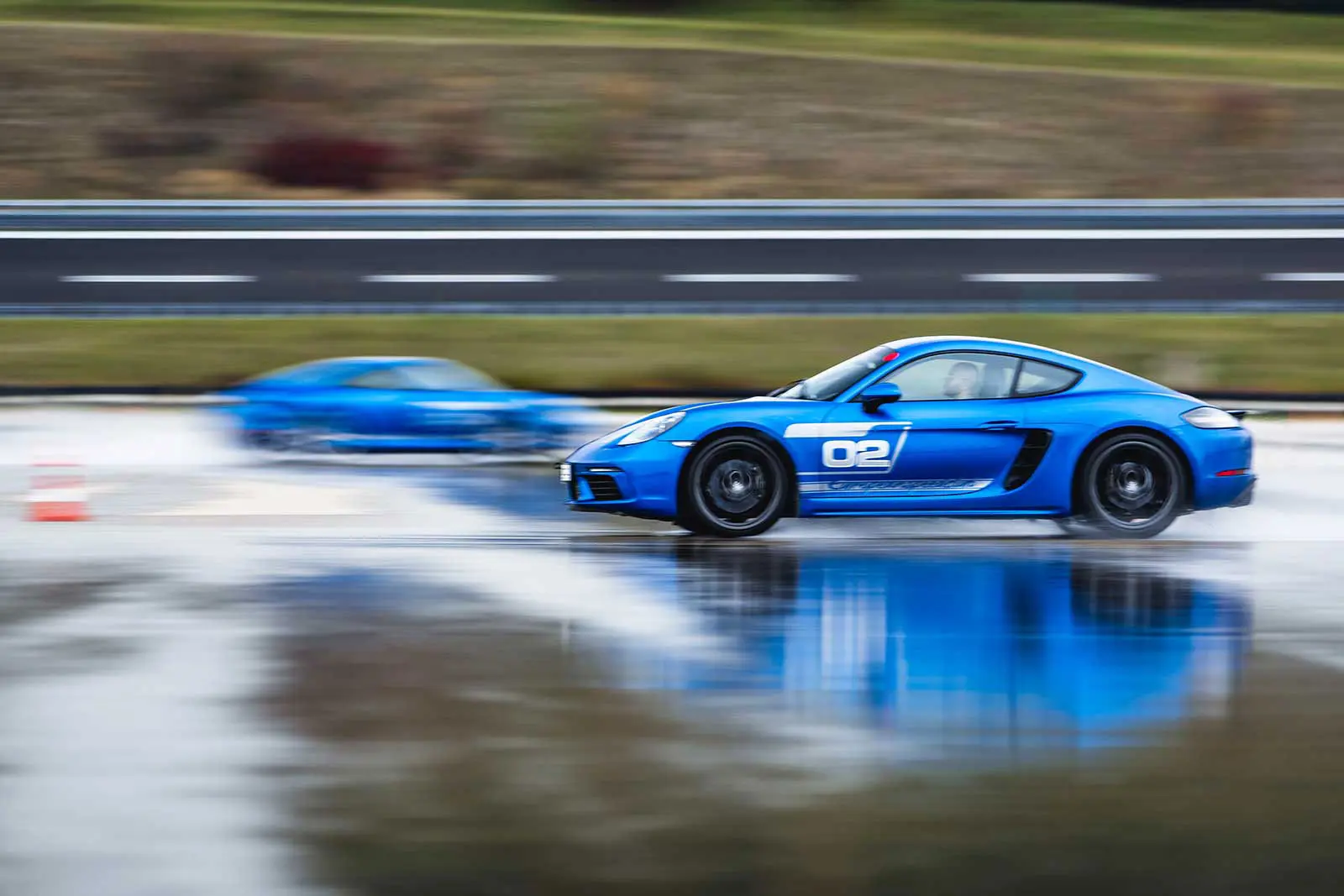
At ESC, a fleet of more than 60 Porsche models is at your disposal. The range extends from the 718 Spyder through the 992 and 992 Cabrio to the GT4, GT3 and GT3 RS. There's a suitable vehicle for every level of experience.
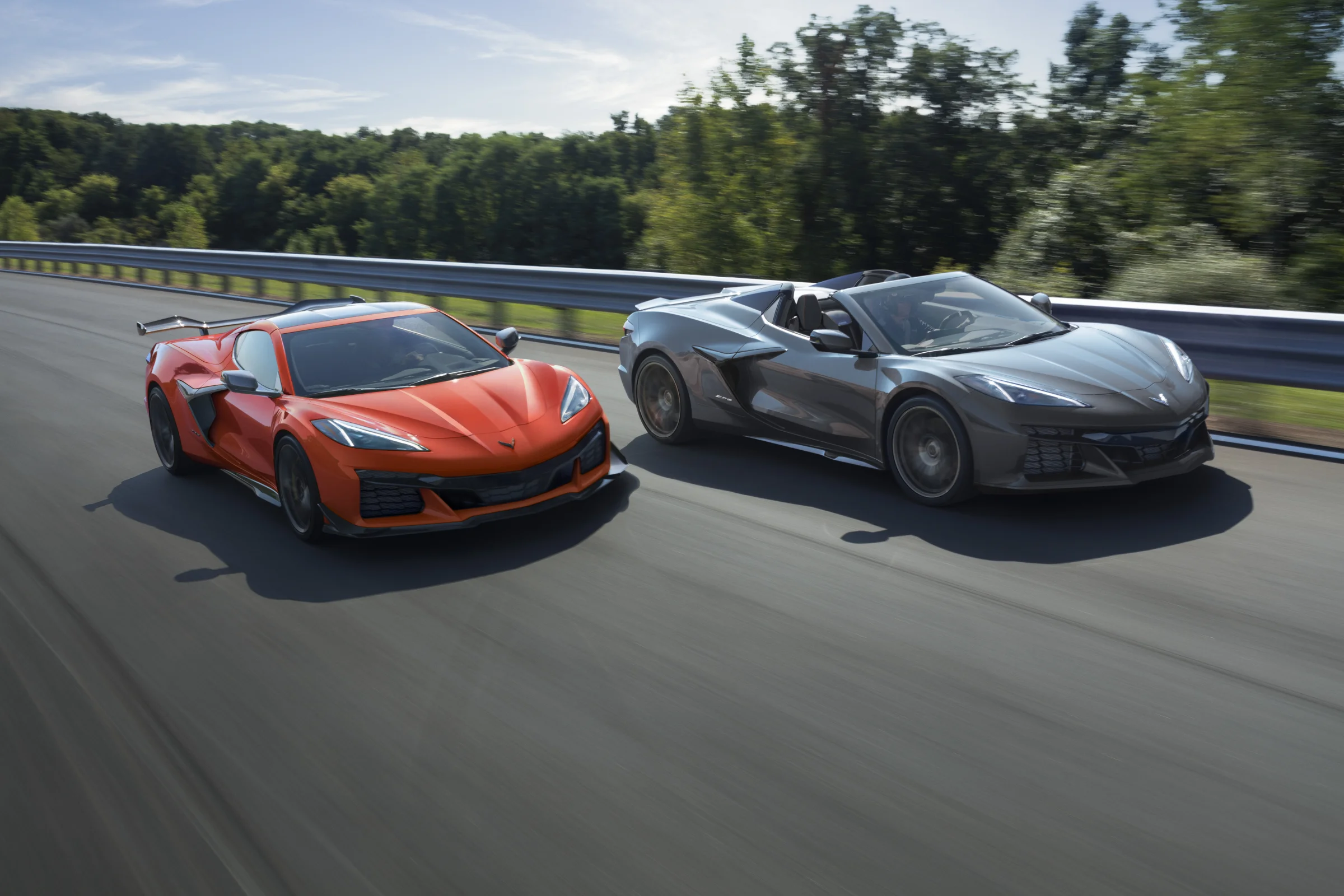
Alongside our Porsche fleet, at selected events we also offer experiences with the Corvette C8 E-Ray – American V8 power with hybrid all-wheel drive. Find out more in our Corvette C8 Trackday Guide.
All cars are professionally maintained and prepared by the in-house workshop Paddock 7. You step into a vehicle that's ready for the track. Insurance is included in the price – with a defined excess you know in advance. No hidden costs, no nasty surprises.
The best part: with every CarForGo vehicle you get professional coaching. You don't just learn the track – you also learn how to extract the maximum from the vehicle, safely and in control.
The Best Race Tracks for Trackdays in Germany
Germany offers some of the most legendary race tracks in the world. But not every circuit suits every driver. Here's an overview to help you choose.
For Beginners: Boxberg Driving Center
The Boxberg Driving Center is strictly speaking not a race track, but a test track. And that's precisely what makes it the perfect starting point. The facility belongs to Bosch and was originally built for the development of vehicle technology.
For you, this means: state-of-the-art safety standards, impeccably maintained asphalt and an atmosphere that's far less intimidating than a real racing circuit. Speeds are more moderate, run-off areas generously sized. You can make mistakes without immediately ending up in the barrier.
Boxberg is the ideal place to internalise the fundamentals: finding braking points, training your vision, developing a feel for vehicle dynamics. The perfect step before tackling more demanding circuits.
→ Boxberg Race Track – The Complete Guide

For Advanced Drivers: Nürburgring GP Circuit
The Nürburgring Grand Prix circuit is a modern Formula 1 track with everything that entails: wide run-off areas, first-class safety facilities and a track layout that's challenging without becoming dangerous.
Here you can really push the pace. The corners are fast, the braking zones demanding. But unlike the Nordschleife, there's room for mistakes. If you lose control, you end up in the gravel – not in the ditch.
The GP circuit is perfect for drivers who have already accumulated trackday experience and want to take the next step.
→ Trackday Nürburgring – Guide to the GP Circuit
The Ultimate Challenge: Nürburgring Nordschleife
20.8 kilometres. 73 corners. The Green Hell. The Nordschleife is no ordinary race track – it's a monument to motorsport.
But it's also dangerous. Blind crests, narrow sections, minimal run-off areas. The track forgives no mistakes. The Nordschleife is not for beginners. Build experience on other circuits before venturing here.
The difference between tourist laps and closed trackdays is particularly important at the Nordschleife. On tourist laps you share the track with motorbikes, motorhomes and other unpredictable road users. A closed trackday gives you controlled conditions and often professional instruction as well.
→ Trackday Nordschleife – Your Guide to the Green Hell
International: Spa, Zandvoort and More
Look beyond Germany's borders and legendary circuits await. Spa-Francorchamps in Belgium with the famous Eau Rouge. Zandvoort in the Netherlands, host to Formula 1. These circuits offer unique challenges and unforgettable experiences.
ESC offers dates at several European circuits. That way you can experience different characters – from the fast corners of Zandvoort to the elevation changes of Spa.
→ Trackday Zandvoort – Driving the F1 Circuit
Trackday Organisers Compared
Choosing the right organiser is crucial for your experience. Not every provider suits every driver. Here's an honest overview of the different categories.
Manufacturer Programs
Porsche Experience, BMW M Driving Experience, AMG Driving Academy – manufacturers offer their own programmes. Vehicles are provided, coaching is included, everything feels perfectly organised.
The advantage: official brand experiences. Perfect for beginners who want to get a first taste.
The downsides: expensive – prices between 1,599 and 14,999 euros are not uncommon. The programmes are often rigidly structured. And you drive as part of a group – individual attention is limited.
Premium Full-Service
The European Speed Club combines the best of all worlds. CarForGo means: you don't need your own car. Professional coaching is always included. And the groups are deliberately kept small – between 40 and 80 participants rather than 150 or more.
The fleet comprises more than 60 Porsche models. The instructor team consists of drivers with a genuine motorsport background – including world champions and professionals with decades of experience. For over 25 years, ESC has been organising driving experiences at the highest level.
The only downside: prices are in the premium range, from 895 euros. But in return you get a complete worry-free package with no hidden costs.
→ Discover ESC Trackday dates 2026

Checklist: How to Prepare for Your First Trackday
To make your trackday a success, there are a few things you should prepare. Here are the most important points.
What You Should Bring
A helmet is mandatory at every trackday. Most organisers offer hire helmets – though quality varies. If you drive regularly, investing in your own helmet with ECE or Snell certification is worthwhile.
Wear long clothing and sturdy footwear. This is not a formality – in an emergency it protects you. A race suit is not necessary, but long trousers and closed shoes are.
Don't forget your driving licence. And earplugs are optional but recommended – especially during long sessions, it gets loud.
Vehicle Check (If Using Your Own Car)
If you're driving your own car, you should check it thoroughly beforehand. The brake fluid must be fresh – old fluid can boil under load and cause brake failure. Check tyre tread and tyre pressure. Remove all loose objects from the interior – under hard braking, everything becomes a projectile.
→ Trackday Insurance – What You Need to Know
Mental Preparation
Your goal on your first trackday should not be to break lap records. It's about learning. About getting a feel for the track, for the car, for your own limits.
Take the coaching on board. The instructors know what they're talking about. Leave your ego at home. And plan in breaks – trackdays are more demanding than you might think. Maintaining concentration for hours takes its toll.
With ESC, the entire vehicle check is taken care of when you book a CarForGo vehicle. We prepare your car – you focus on driving.
Your Next Step
You now have all the knowledge to plan your first – or next – trackday. The only question is: when do you start?
At European Speed Club you'll find the complete worry-free package. Professional instructors with a genuine motorsport background. A fleet of more than 60 Porsche models. Experiences at the best circuits in Europe. Whether you bring your own car or book a CarForGo vehicle – we make sure you can focus on what matters: the driving.
→ Discover ESC Trackday dates 2026
→ Give a Trackday as a Gift – ESC Vouchers
Questions? Contact us directly – we're happy to advise you personally.
Sources & Further Information
- ESC Trackday Dates – Current events and prices for all circuits
- Nürburgring – Official circuit information
- Hockenheimring – Official circuit information
All prices are subject to change. As of: 2026. ESC prices apply in accordance with the current ESC terms and conditions. Prices for other organisers are based on publicly available information and may vary.
Frequently Asked Questions
A typical Trackday starts with check-in and a detailed safety briefing. You'll learn everything about the track layout, flag signals and rules of conduct. After that you're assigned to a group – usually by experience level. Track time is split into sessions of 20–30 minutes, with breaks in between for feedback, recovery and vehicle checks. With premium organisers like ESC you also get personal coaching between sessions.
Damage to third parties (other participants, track owners) is covered by participant liability insurance. Damage to your own vehicle is only covered if you have taken out separate trackday hull insurance, or if you are using a hull-insured vehicle from the event organizer.
The most common beginner mistakes: going too fast too soon instead of first learning the track. Braking too late and getting back on the throttle too early in corners. A tense grip on the steering wheel and lack of forward vision. Ignoring coaching and thinking you know better. Not taking breaks – concentration drops noticeably after 20–30 minutes. Tip: take professional coaching and build up slowly.
It depends on the organiser and the track. At many Trackdays passengers are allowed – often even encouraged when an instructor rides along to give you direct feedback. For private passengers there are usually age restrictions (18+) and a helmet requirement. Clarify the rules with the organiser in advance.
Expect significantly higher consumption than in everyday driving – on the racetrack the car is constantly running in the upper rev range. Plan in plenty of fuel and check refuelling options at the track in advance. With CarForGo bookings at ESC, by the way, fuel is included in the price.
Still have questions?
Contact our team — we'll help you find the right cover for your next track day. Or sign up for our exclusive ESC newsletter and stay up-to-date!
.jpeg)