


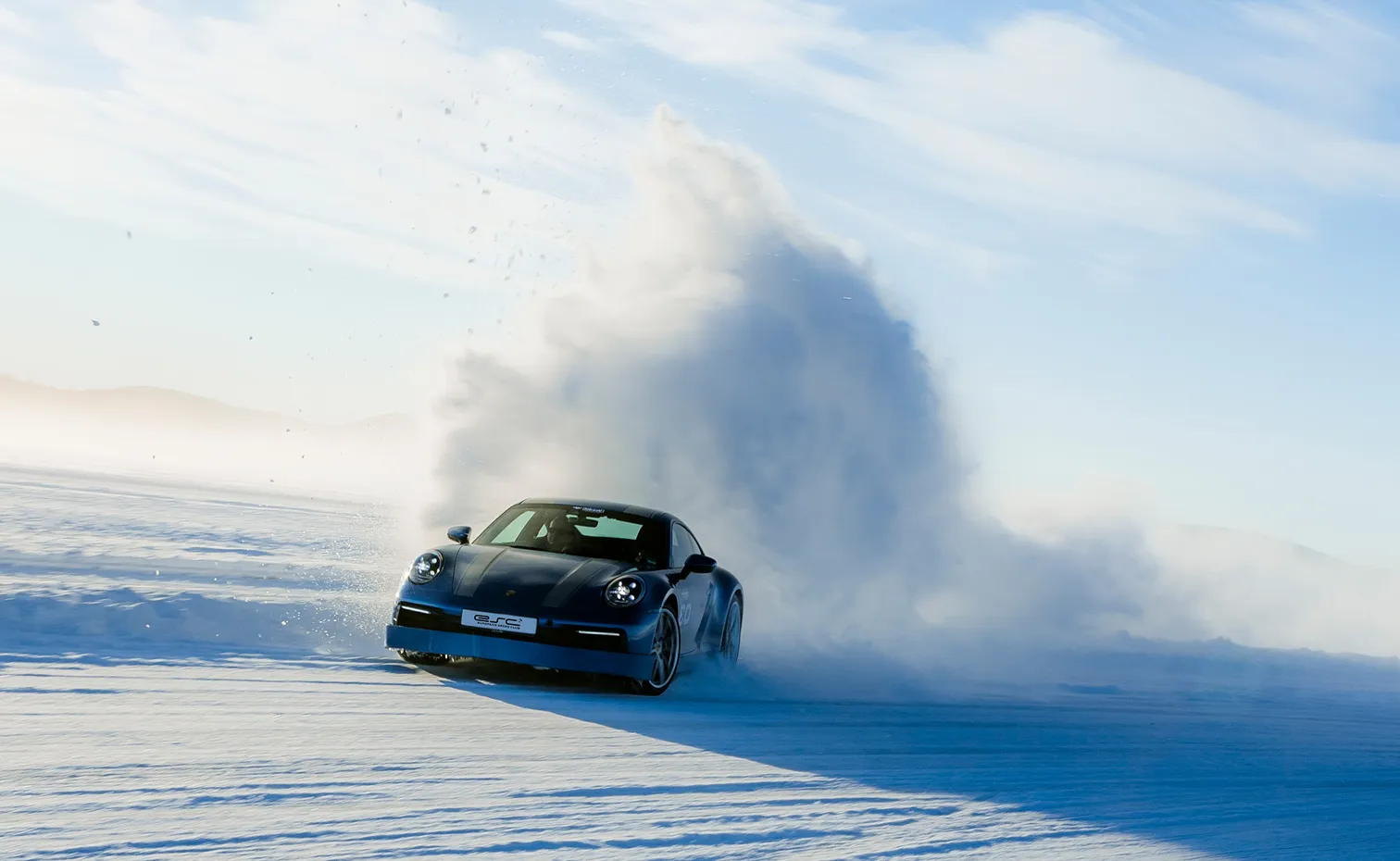


Understeer

What is understeer?
Understeer happens when the front tyres lose grip and the car keeps pushing straight on despite your steering input. The car stops responding to the wheel and drifts towards the outside of the corner. Understeer is the opposite of oversteer and feels more natural to most drivers — it still becomes dangerous if you react the wrong way.
Causes of understeer
Understeer typically comes from too much entry speed, too much throttle on turn-in in front-wheel-drive cars, heavy braking mid-corner, or worn front tyres. Front-wheel-drive cars understeer by design, while rear-wheel-drive cars such as the Porsche 911 tend towards oversteer. A poor suspension setup or low front tyre pressure makes the problem worse.
Correcting understeer
The instinctive reaction — more steering lock — makes the situation worse. The correct technique: ease off the throttle, unwind the steering slightly and wait for the front tyres to bite again. Lifting moves weight forward, so the front tyres regain grip. Only once the steering responds again do you carefully add lock. Hard braking during understeer is counterproductive.
Understanding vehicle dynamics at ESC
On ESC trackdays our coaches analyse your driving and show you how to avoid and correct understeer. In a fully insured Porsche you explore the limit without financial risk. Find out what your car can really do.