


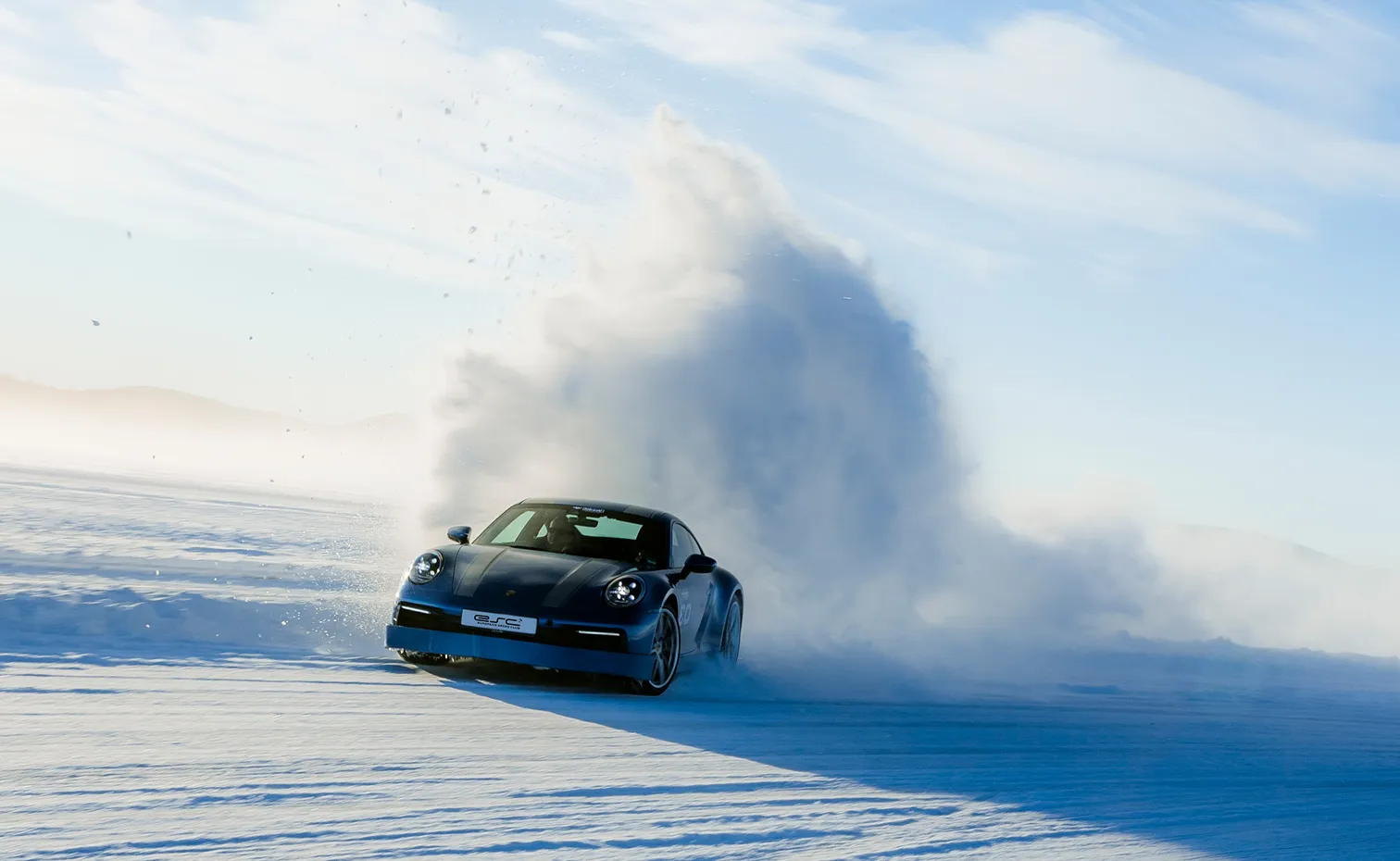


Camber

What is camber?
Camber is the angle between the plane of the wheel and the vertical, seen from the front. With negative camber, where the top of the tyre leans inwards, the car keeps a larger contact patch on the asphalt through a corner, which means more grip. With positive camber it is the other way around. For track use, slightly negative camber is the norm.
Why negative camber creates grip
Through a corner the lateral load pushes the tyre onto its outer edge. Without any built-in angle the tyre briefly runs on its outer sidewall rather than its tread. With minus 1 to minus 3 degrees of negative camber the tyre sits squarely on its tread mid-corner. The result is maximum contact and therefore maximum grip.
Track day setup values
On a road-going 911, minus 0.5 to minus 1 degree at the front is typical. For a track focus, minus 1.5 to minus 3 degrees. More camber means more cornering grip but less grip under straight-line braking and faster wear on the inner shoulder. Finding that balance is the job. Factory GT3 models often come with around minus 1.5 degrees as standard.
Camber on ESC cars
The ESC track day Porsche models run camber settings optimised for circuit performance, so you have nothing to prepare: the car is ready. Take a look at the prepared fleet. Experience a track setup first hand.
