




Kerbs

Kerbs are the raised or painted edge strips that line the inside and outside of a race circuit's corners. They define the track boundary, mark the outermost legal limit of the racing surface, and in the wrong place, demand genuine respect.
What Are Kerbs?
Kerbs are narrow, colour-striped sections of asphalt or concrete placed at the apex and exit of corners on a racing circuit. A driver who clips the apex kerb correctly widens the effective track width, allowing a gentler arc and more corner speed. The term "kerbs" is standard in European motorsport (British English). The American spelling is "curbs". On the circuit, both describe exactly the same thing.
Types of Kerbs
Not all kerbs work the same way. The surface beneath your tyres tells a very different story depending on the circuit and the corner.
Flat kerbs are low-profile, smooth or lightly serrated sections that sit flush with the track surface. Most modern circuits place these at apex points. They are designed to be driven. A road car on standard suspension crosses them without drama at normal trackday speeds.
Sausage kerbs earn their name from their profile: a raised, cylindrical rubber or concrete bump, sometimes 5 to 10 centimetres high, placed beyond the painted apex line. They exist to stop drivers cutting the corner and gaining illegal time. On Formula 1 circuits they enforce track limits. On a trackday, a sausage kerb hit at speed can bottom out your suspension, launch a wheel into the air, or cause an immediate loss of control.
Rumble strips are wide, corrugated sections with a distinctive texture and sound. They transmit information through vibration and noise rather than a sharp vertical spike. Many drivers use them as a tactile reference for their line position.
When Should You Use Kerbs?
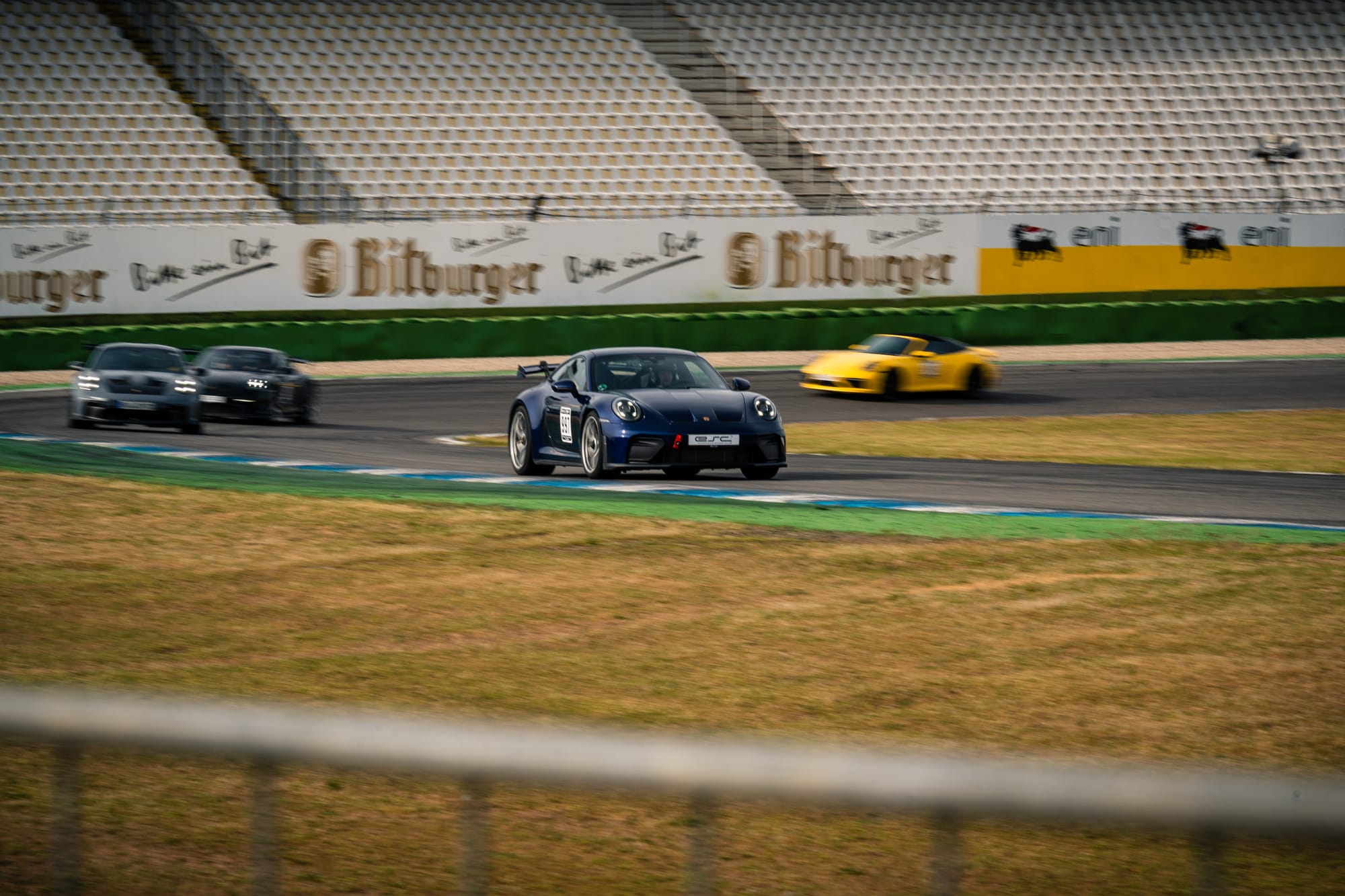
Using kerbs correctly is part of driving the optimal racing line. At a classic slow-to-medium corner, placing your inside front wheel on the apex kerb widens the effective track. A wider track means a gentler arc through the corner. That translates to more speed at the exit.
The practical rule: if the kerb is flat and painted white, it is designed to be used. Clip the apex kerb. Let the car settle across it. Exit on the outside kerb if the geometry and your suspension allow.
Faster corners follow different logic. At high speeds, stability matters more than the extra centimetres a kerb offers. A kerb crossing at 180 km/h or above unsettles the car in ways that are hard to manage mid-corner. Keep a tighter, cleaner line through fast sections rather than chasing the edge.
When Should You Avoid Kerbs?
Sausage kerbs are not designed for road cars at track speeds. At circuits like the Red Bull Ring and sections of the Nordschleife, sausage kerbs sit just beyond the painted limit line. The spike load on your wheel, wishbone, and damper is extreme. The real risk: cracked alloys, bent suspension geometry, and immediate tyre failure.
The second situation requiring caution is the outside exit kerb on a blind crest or cambered corner. As your car crosses the crest, tyre contact with the road reduces sharply. With active stability systems running, the correction is fast. Without them, the response falls entirely to the driver.
Lowered cars and cars on stiffened coilover setups face the highest risk. If your car sits below standard ride height, treat every sausage kerb as a physical barrier, not a line reference.
Kerbs at the Nordschleife and Hockenheimring

The Nordschleife has some of the most varied kerbing on any permanent circuit. At Hatzenbach, the flat apex kerbs can be used aggressively. The Schwedenkreuz area demands caution: road camber and kerb position combine to unload the outside wheel at exactly the wrong moment. The Karussell is a special case. Its banked concrete surface acts as a progressive kerb that stabilises the corner when used correctly. Learning to carry the car through the Karussell banking is one of the defining Nordschleife skills.
The Hockenheimring Grand Prix circuit features kerbing designed for modern race cars. The Mercedes Arena and the final chicane section have kerbs that GT and touring car series drivers use every lap. For a road car on a trackday, the apex kerbs at most Hockenheim corners are manageable at moderate pace. The chicane exit kerbs reward precision: too much aggression in a rear-wheel-drive car produces the kind of snap oversteer that is difficult to catch.
Suspension and Chassis Effects
Every kerb crossing sends a vertical load through your wheel and into the suspension. How significant that load is depends on three things: kerb height, your speed at the contact point, and how much bump travel your suspension has available.
For a road car on a trackday, the primary risk is not chassis damage. It is spike loading on the lower ball joint, the wheel bearing, or the tyre sidewall. A kerb hit that compresses the suspension past its bump travel can crack an alloy wheel or shear a tyre valve stem.
Porsche models running PASM adjust damper stiffness continuously. The system responds in milliseconds to the load signal from each wheel. This smooths kerb inputs and helps maintain tyre contact with the road. The system reacts after the load arrives, not before, so a sausage kerb at speed remains a genuine risk even with PASM active.
Learn the Line, Then the Kerbs
Kerbs are a tool, not a target. They reward drivers who understand exactly where the flat surface ends and the raised bump begins. The most direct way to build that knowledge at any circuit is to drive each corner progressively under professional coaching.
An experienced ESC instructor walks you through the circuit before your first session and shows you exactly which kerbs to use and which to avoid. That knowledge carries through every lap you drive from that point. If you want to build that foundation, our coaching programme is the place to start. If you need a car for the day, CarForGo has the right one ready.
