



Track Day Red Bull Ring: Drive a Sports Car in Styria


Some circuits you understand on paper. Others only make sense once you are sitting in the car. The Red Bull Ring belongs to the second kind. On a map it looks short and readable – ten corners across roughly 4.3 kilometres. On track you notice after two laps that this circuit consists almost entirely of climbs and descents, and that this is exactly where its difficulty comes from.
This guide explains how a track day at the Red Bull Ring with the European Speed Club works: which formats exist, how the groups are split, what the coaching delivers and what you need to bring. It is deliberately written to last – current dates are always in the track day overview.
What makes the Red Bull Ring special
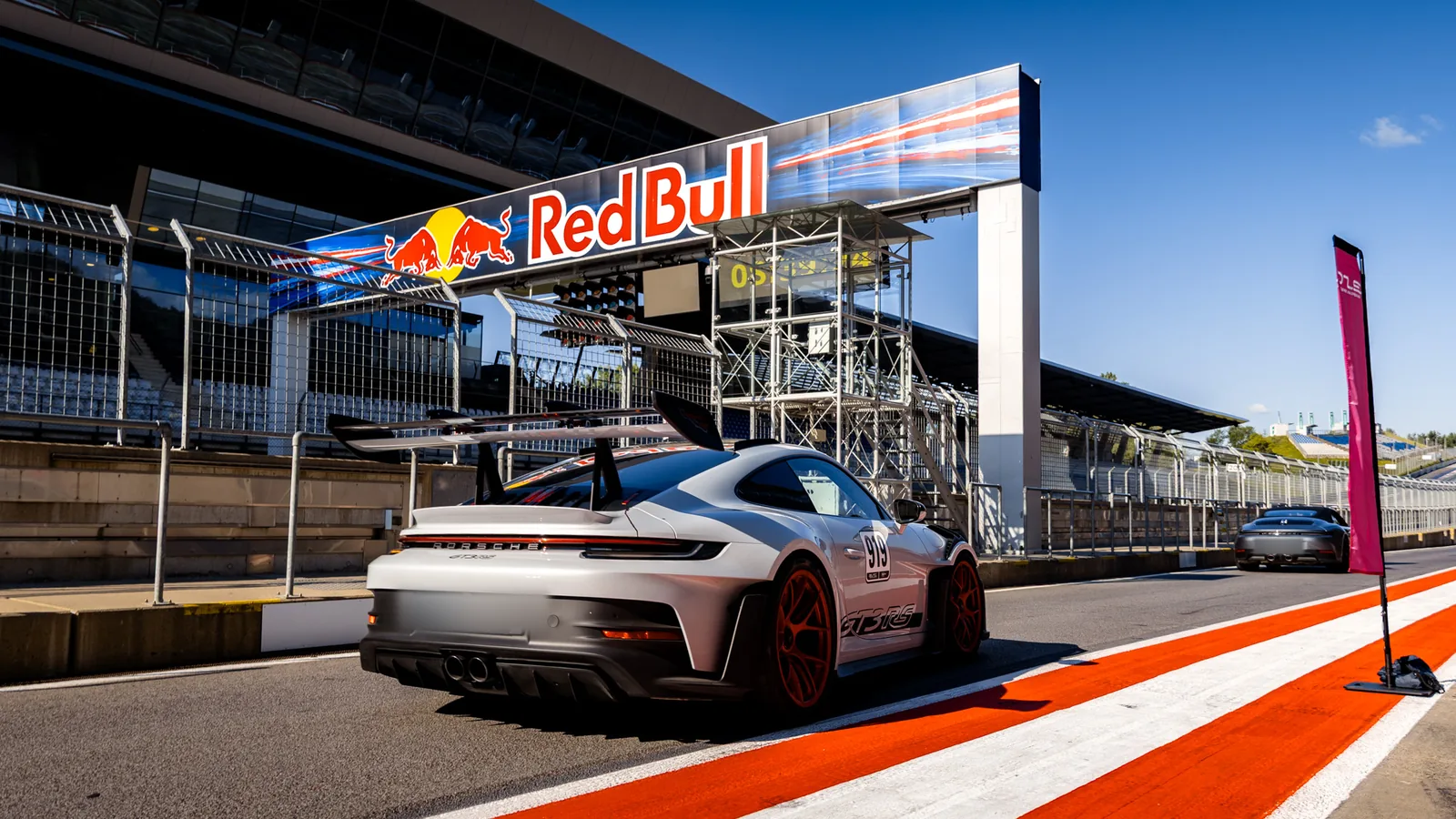
The Red Bull Ring sits near Spielberg in Styria, set into the foothills of the Alps. The circuit has existed under changing names since the 1960s – first as the Österreichring, later the A1-Ring, and since the rebuild as the Red Bull Ring. Formula 1 still races here today.
The elevation profile is what defines it. From the lowest to the highest point the track climbs noticeably, and not evenly but in steps. That changes everything: braking points sit differently than on a flat circuit, the car goes light under braking downhill and heavy on the exit uphill, and the racing line follows not just the corner but the terrain.
On top of that, the lap is short. Ten corners mean plenty of repetitions per session – you get the same corner often enough in one day to actually work on it. That makes the Red Bull Ring an excellent place to learn for anyone who wants not just to drive, but to get better.
The formats at the Red Bull Ring
ESC runs several formats at Spielberg. They differ in length, in how the day is structured and in which cars they are meant for. The overview below describes the usual case – individual dates may differ.
| Format | Structure | Limit | Who it suits |
|---|---|---|---|
| One day | Two groups, each 2 × 45 min and 3 × 40 min | – | Starter and Expert |
| Two days MORE TRACK TIME | Two groups, each 4 × 45 min and 6 × 40 min | – | Starter and Expert |
| Race test day | Open pit lane | 20 cars | Expert |
Which formats run on a given date is set out in the description of that event.
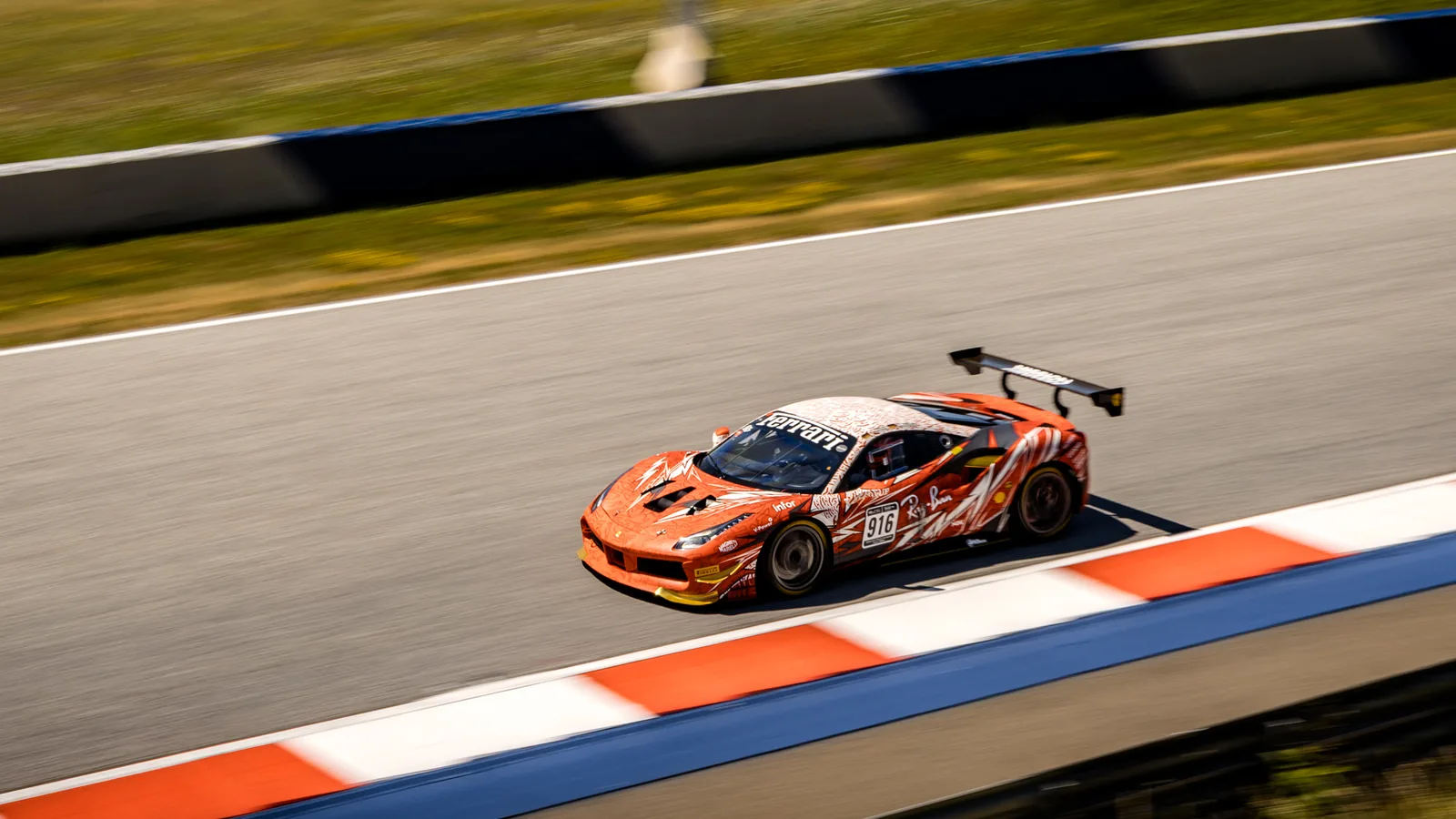
One-day and two-day format
On a regular track day two groups run alternately, split by experience. Starter is for anyone building up their sporting driving under guidance; Expert for experienced drivers looking for clear laps with little traffic. The two-day format nearly doubles the track time – and on a circuit that lives on repetition, that is the real gain.
Race test day
The Race test day is aimed at the Expert group: experienced drivers looking for clear laps with little traffic. It runs as an open pit lane – the pit lane stays open and you decide yourself when to go out. The field is normally limited to 20 cars, so there is room on track despite the free running.
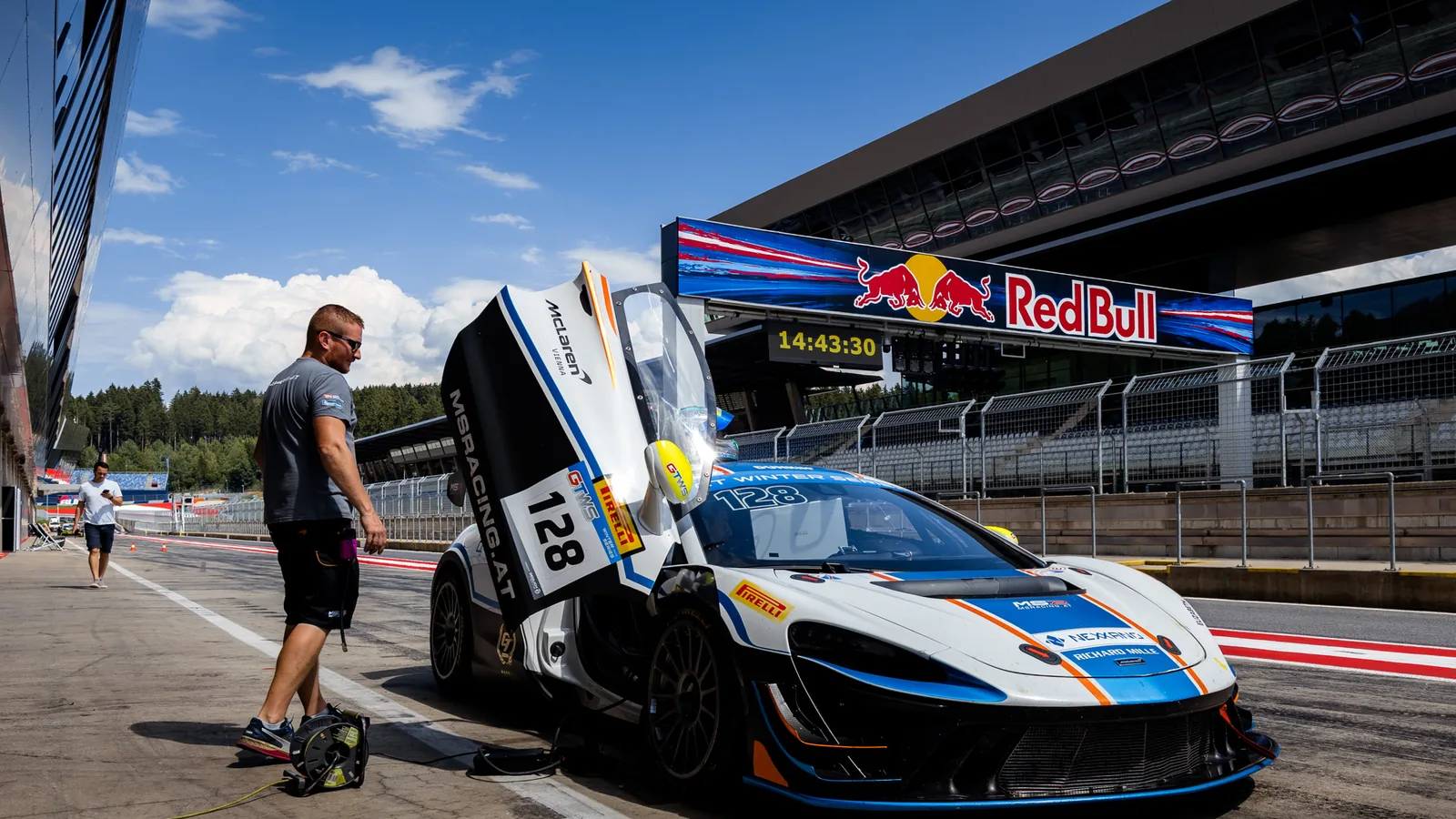
Coaching: the biggest lever on an elevation circuit
On a flat lap you can work out the racing line yourself given enough laps. On a circuit where crests and gradients move the braking points, that route costs considerably more time. Which is why coaching is normally included in ESC track days.
As a rule, a maximum of six guests share one coach from a crew that brings world championship titles, Le Mans class wins and factory driver careers at Porsche, Audi, Ferrari and Mercedes-AMG. After the briefing on track specifics – crests, grip levels, emergency exits – the driving starts. The coach leads the way, sits beside you on request or takes the wheel himself. He stays reachable by radio all day long.
Our advice to newcomers: let the coach drive your own car first. Little else shows more quickly how much potential is in the car – and how much of it still sits with the driver.
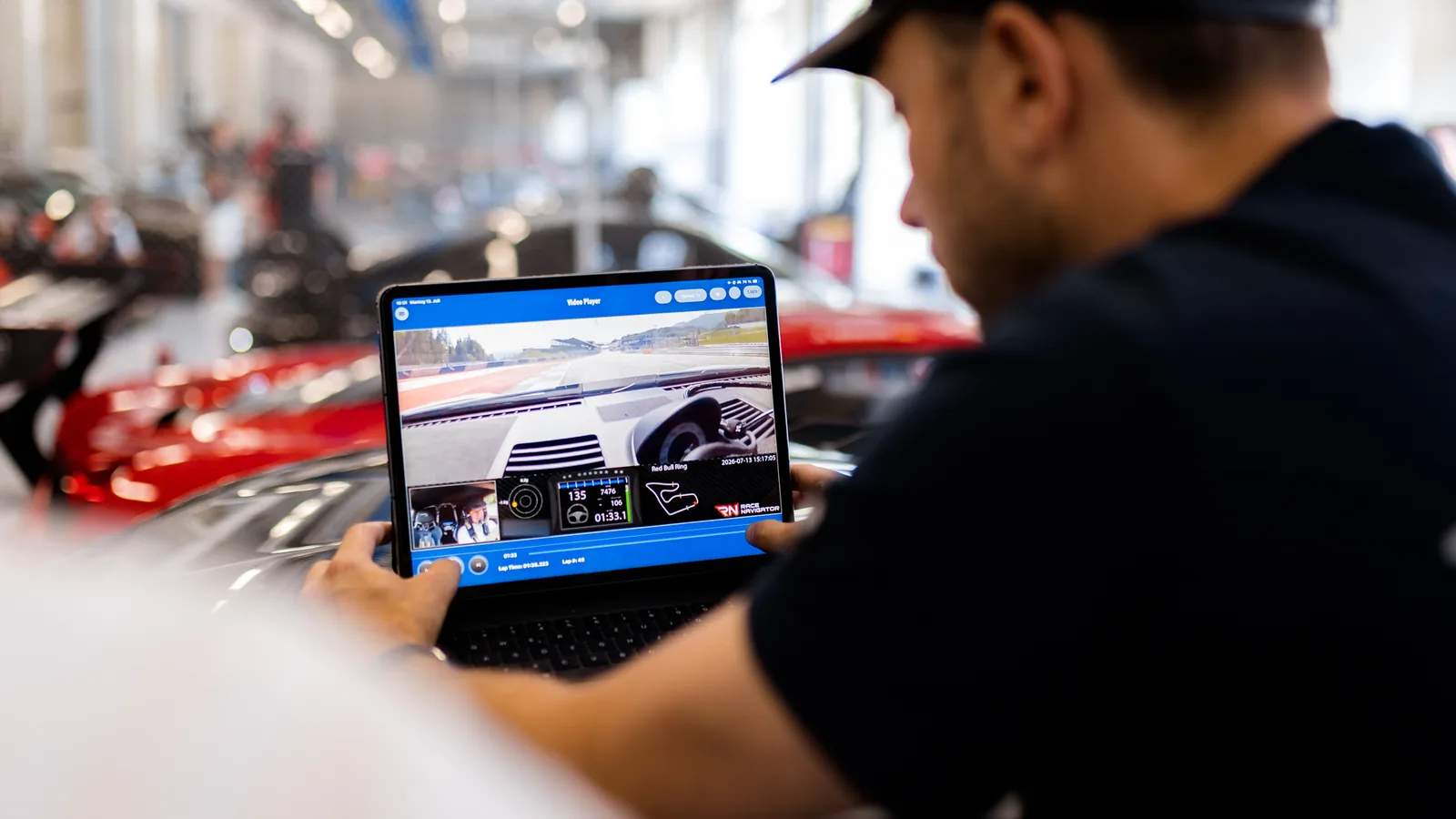
No sports car of your own? Rent a car at the Red Bull Ring
Not everyone wants to drive their own car across the Alps to Spielberg. That is what CarForGo is for: ESC brings the car to the circuit fully prepared, normally including insurance, brake and tyre wear and a mechanic on site.
The fleet is deliberately open across makes and reaches from the entry-level model to a clubsport car with roll cage and racewear. Which cars are available on your date is shown when you book and in the fleet overview.
One practical point many people only appreciate after their first track day: on a trip abroad you save not only the preparation of your own car, but also the long drive home after a day at the limit.
How a track day at the Red Bull Ring runs
The day starts early with scrutineering and the drivers' briefing. After that the groups run alternately, interrupted by breaks for tyre pressures and for sorting through impressions. On the Race test day the group split gives way to the open pit lane.
On most dates the overnight stay on the day of arrival in a single room, plus cold snacks and a hot meal on the track day, are included in the price. An organised driver's dinner is available at extra cost. Also normally on site: our service team, which helps with tyre pressures and vehicle checks.
Between sessions there is time for conversation in the paddock. That is where the thing many participants remember most clearly takes shape – contact with people chasing the same goal.
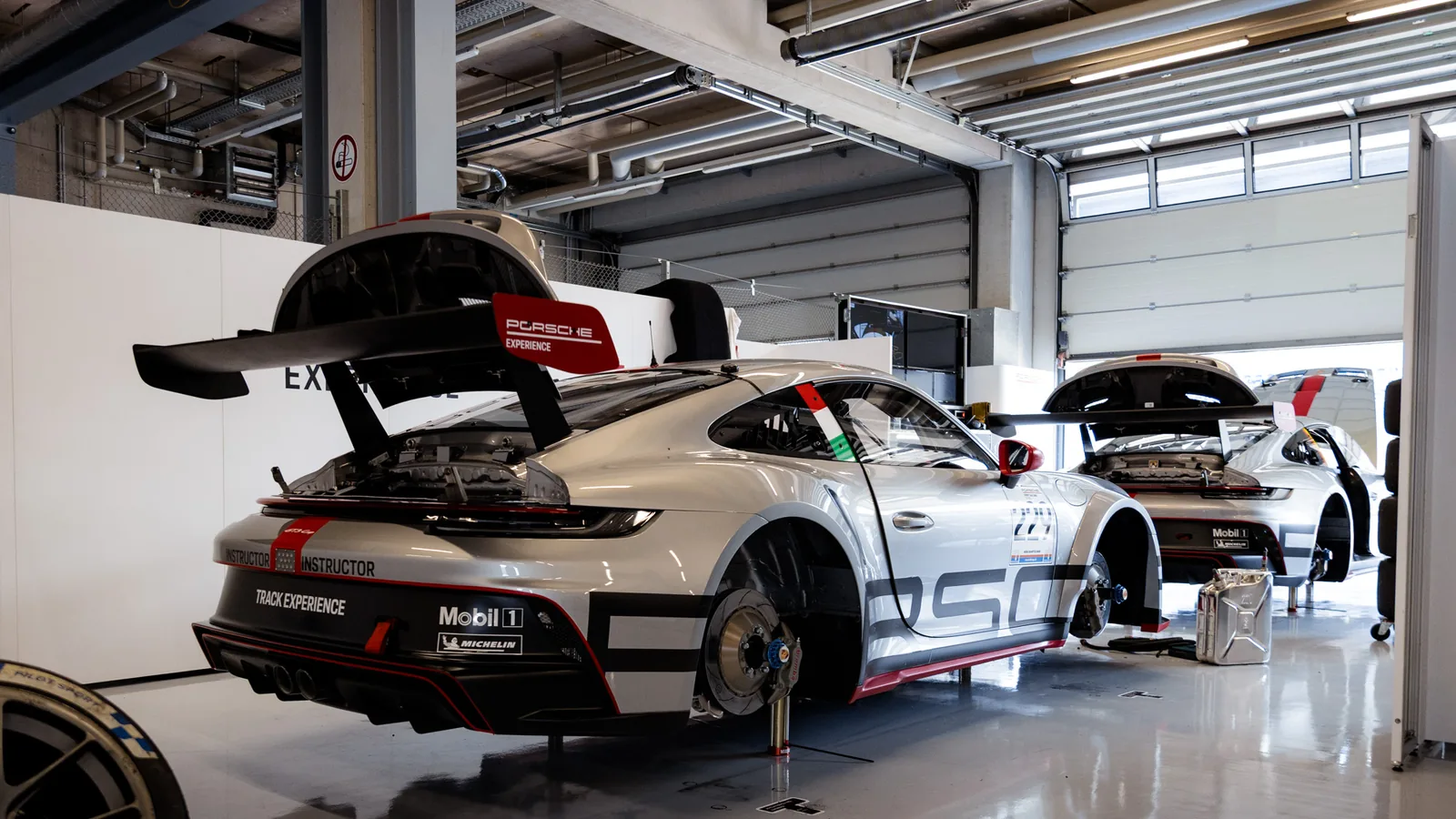
Requirements: what you need to bring
- A valid driving licence – no racing licence required
- A technically sound car; a noise limit of 100 dB applies at the Red Bull Ring
- Helmet: we recommend wearing one at the Red Bull Ring. Ideally bring your own – it can also be hired through us on request
- A full tank on arrival
- Valid travel documents for Austria and a motorway vignette for the drive
- A second T-shirt to change into – a driving day is more tiring than it looks
- Companions are welcome, minimum age 16
Two things visitors from Germany most often overlook: the noise limit at Spielberg is higher than at the Hockenheimring or the Bilster Berg, but lower than at Spa. And unlike at the Nürburgring or Spa, a helmet here is normally a recommendation rather than a requirement – what applies on your date is set out in the description of the event.
Insurance, rebooking and cover
ESC's organiser liability normally covers participant liability. Whether your own comprehensive policy covers damage on a circuit is something you should have confirmed in writing – for many dates we also offer an optional ESC comprehensive guarantee. Free rebooking is likewise available for many dates, typically once, up to eight days before the event, onto another date with places free in the same calendar year.
The services, deadlines and cover that apply to your specific date are set out in the description of the individual event and in our terms and conditions, which take precedence.
Who a Red Bull Ring track day suits
Drivers who want to work properly on a manageable number of corners, rather than spending days learning a long circuit. Experienced drivers, because the elevation profile punishes every lapse in forward vision immediately. And anyone who wants to drive a circuit where Formula 1 genuinely still races.
If you want to build up to it, start with driver training at the Boxberg proving ground and arrive in Spielberg with a toolkit – instead of working out the basics on a race circuit.
Conclusion
The Red Bull Ring is short, fast and anything but simple. Learn to read the elevation changes and you will drive more cleanly here than on many circuits with twice as many corners. Small groups, professional coaching and a fleet that can be provided in full make the first step predictable.
All upcoming dates are in the track day overview. Our track day FAQs answer the rest.
Frequently asked questions about a track day at the Red Bull Ring
A noise limit of 100 dB normally applies at the Red Bull Ring. Sports cars with the manufacturer's original exhaust usually meet it comfortably. If you run a non-standard exhaust, check the figure before booking. The limit that applies to your date is set out in the description of the individual event.
We recommend wearing a helmet at the Red Bull Ring. Ideally bring your own – helmets can also be hired through us on request. Whether a helmet is mandatory on your date is set out in the description of the event. On other circuits, such as the Nürburgring or Spa, helmets are normally mandatory throughout.
As a rule, two groups run alternately, split by experience into Starter and Expert. On the one-day format that usually means two turns of 45 minutes plus three turns of 40 minutes per group; on the two-day format four of 45 and six of 40 minutes. The Race test day instead runs as an open pit lane and is normally limited to 20 cars. What applies on your date is set out in the description of the event.
On most dates the overnight stay on the day of arrival in a single room, plus cold snacks and a hot meal on the track day, are included in the price. An organised driver's dinner is available at extra cost. What counts are the services listed for your specific date and our terms and conditions.
The Red Bull Ring is at Spielberg in Styria, Austria. Address: Red Bull Ring Straße 1, 8724 Spielberg. You need an Austrian motorway vignette for the drive, plus valid travel documents. Allow plenty of time – arriving the day before makes for a far calmer start to the driving day.
Still have questions?
Contact our team — we'll help you find the right cover for your next track day. Or sign up for our exclusive ESC newsletter and stay up-to-date!