




PDK (Porsche Doppelkupplungsgetriebe)

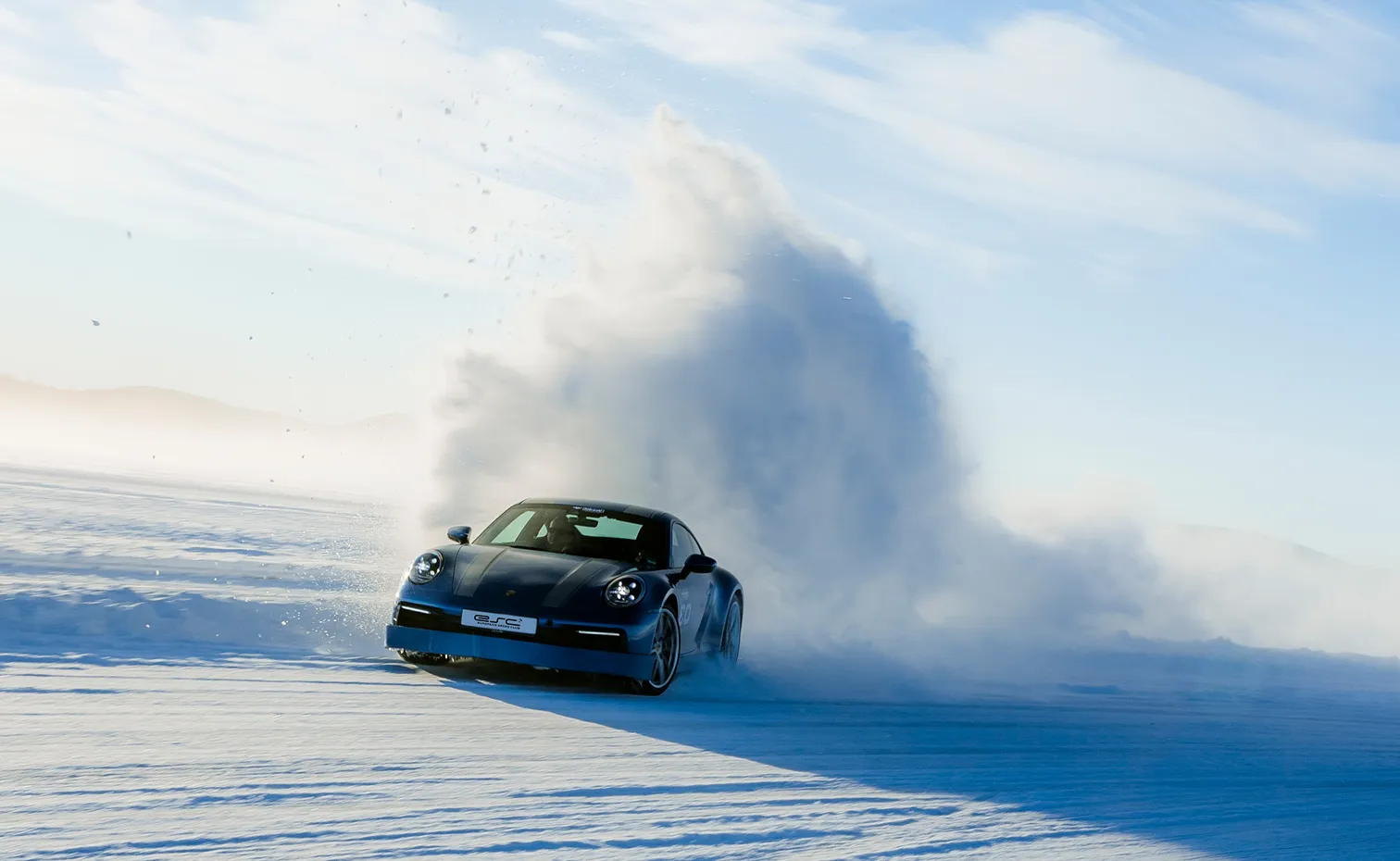
PDK stands for Porsche Doppelkupplungsgetriebe: Porsche's own dual-clutch transmission. It was tested in Group C racing in 1981, refined across two decades of motorsport, and reached production cars in 2008. Today, PDK is fitted to most Porsche models in the ESC fleet. Knowing how it works, and how to drive it well, changes what is possible on a circuit.
How the PDK Works
The PDK carries two separate clutch packs on concentric shafts. One shaft holds the odd-numbered gears: 1st, 3rd, 5th, and 7th. The other holds the even-numbered gears and reverse: 2nd, 4th, 6th, and R. While one gear is active and power is flowing, the next gear is already pre-selected on the waiting shaft.
When the shift command arrives, one clutch releases precisely as the other engages. There is no gap. No break in power delivery to the rear wheels. The entire crossover takes approximately 100 milliseconds. A skilled driver executing a heel-and-toe downshift takes 200 to 400 milliseconds for the same gear change.
That direct mechanical architecture also separates PDK from a conventional automatic. A torque-converter automatic uses a fluid coupling between engine and gearbox. The PDK maintains a direct mechanical connection at all times. The result is immediate throttle response and a sharp, precise feel that no fluid-coupling automatic can replicate.
From Group C to the 992: Racing Origins
The engineering lineage from Porsche's race cars to your trackday car is direct. Porsche began testing dual-clutch technology in 1981 for its Group C racing programme. The concept was straightforward: faster shifts, no power interruption, lower lap times. The barrier was control electronics. Managing clutch engagement reliably required computing investment that only became practical through motorsport budgets and engineering effort.
The system raced in the Porsche 962C and proved itself in some of the hardest endurance conditions in the world. Porsche carried the technology through two decades before the first production PDK appeared in 2008, in the 997.2 Carrera. Everything since, including the 992 GT3 you can drive today through ESC, traces back to those Group C experiments.
Sport Mode, Sport Plus, and the Paddle Shifters
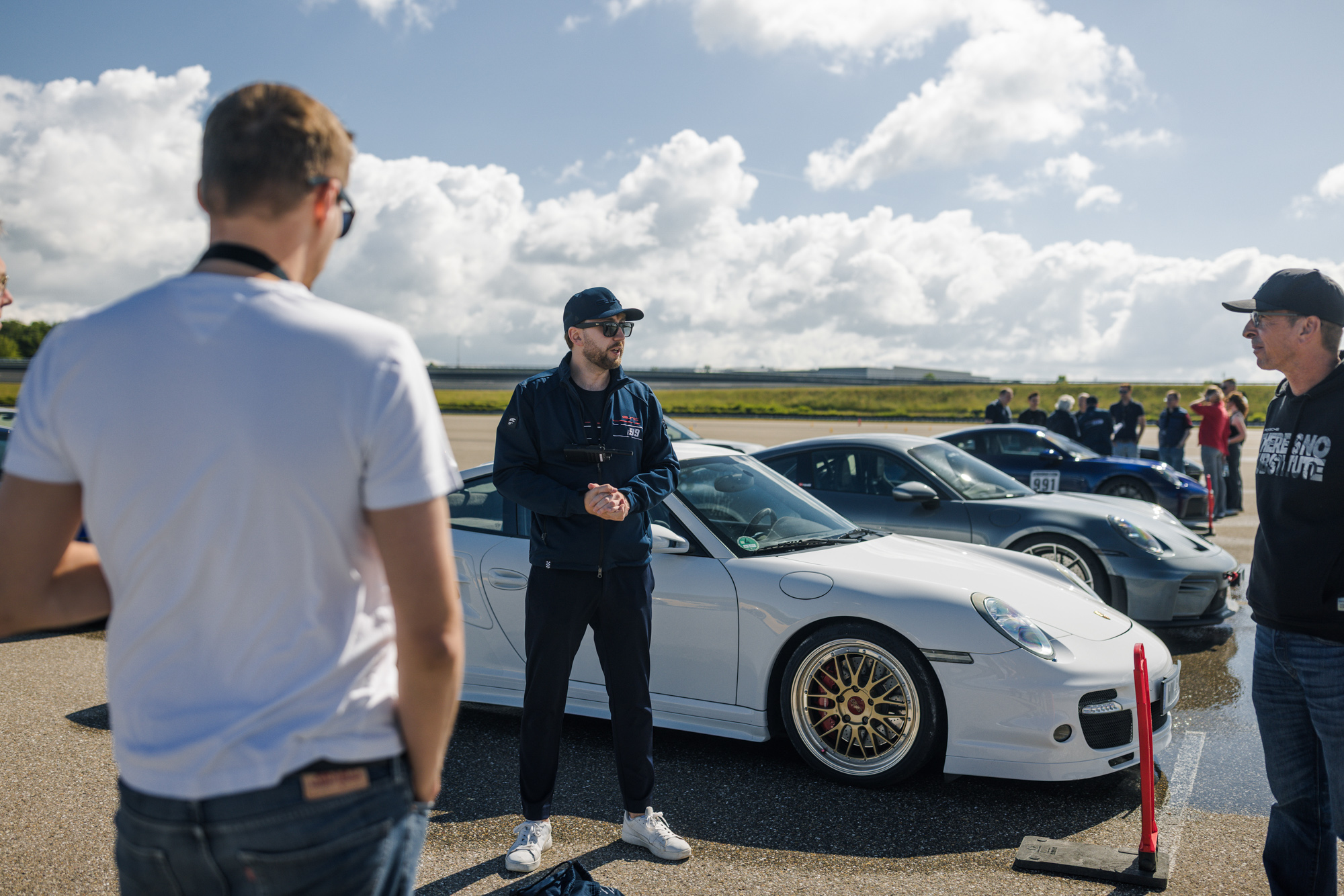
In standard Drive mode, the PDK shifts early and smoothly. It is designed for comfortable daily use and does its job quietly. Most drivers who have only experienced this mode think they understand PDK. They do not.
Engage Sport mode and the gearbox holds each gear longer, raises the rev ceiling for upshifts, and responds more sharply to throttle inputs. Downshifts become crisper and more immediate. The character of the car changes.
Sport Plus goes further again. It holds gears deep into the rev range, executes shifts in the shortest possible time, and keeps the engine at or near its power peak through corners. With the Sport Chrono package, it also enables launch control for optimised standing starts. On a circuit, Sport Plus is the mode that matters.
The paddle shifters are mounted directly behind the steering wheel. Pull the right paddle to upshift, the left to downshift. In manual paddle mode, you retain full control of gear selection. The PDK respects your commands but monitors for over-revving or dangerously low revs, and will intervene to protect the engine when necessary. On a fast circuit, Sport Plus with manual paddle control is the combination that extracts the most from a PDK-equipped Porsche.
PDK vs. Manual on Track: What the Numbers Say
The PDK is faster at changing gears than any human hand on any day. Under braking, it matches engine revs automatically on every downshift. Every upshift on the way out of a corner completes without a break in power delivery. Those advantages compound across every lap, every stint.
The case for the manual is different, and it is real. A clutch pedal creates a physical conversation between driver and machine. You read the bite point. You time your own blip. You feel the connection between engine and drivetrain through your left foot. Many experienced track drivers consider that involvement irreplaceable, and not just as a preference but as a training method: it forces you to develop rev awareness and timing that PDK handles automatically.
The ESC fleet offers both options. The 992 Carrera T with the seven-speed manual is the direct alternative: the same power, the same platform, a different relationship with the gearbox. Driving both back to back on a circuit is one of the clearest ways to understand what each transmission actually gives you. Explore the 992 Carrera T manual in the ESC fleet.
PDK in the ESC Fleet
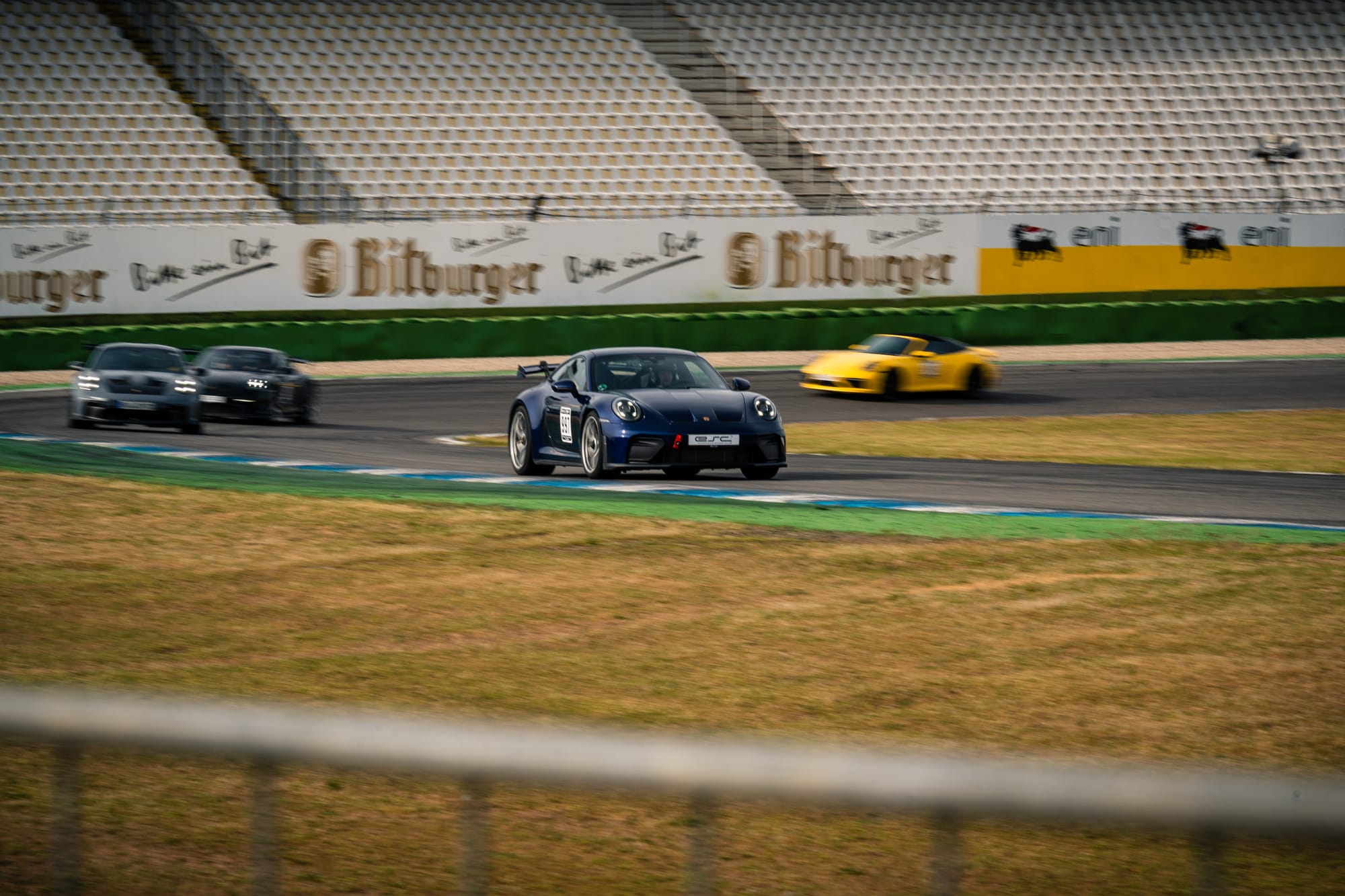
Most Porsche models available through ESC's CarForGo vehicle booking run PDK. The 992 Carrera, 992 Carrera S, 992 Turbo S, 992 GT3, and 992 GT3 RS all use PDK as standard. The 992 Carrera T is available in both configurations: PDK or seven-speed manual.
For drivers new to Porsche on a circuit, PDK removes one layer of complexity from the first laps. You can concentrate entirely on braking points, corner entry speed, and throttle application without managing a clutch. Once those inputs are consistent, switching to the manual is the natural next step. See the full CarForGo Porsche fleet.
Getting the Most from PDK on a Track Day
PDK is a precise tool. Used well, it gives you a clear advantage. A few habits make the difference between using it and using it well:
- Select Sport Plus before your first out-lap. The shift programme changes the car's entire character. Forgetting this and driving in D mode on a fast circuit is a common and easily avoided mistake.
- Use the paddles. Full manual paddle control keeps you engaged with the car's rhythm and puts you in command of every shift. The gearbox will still protect you from over-rev, but the decisions are yours.
- Trust the automatic rev-match on downshifts. The PDK blips the throttle to match revs on every downshift. Fighting this with your own throttle pressure adds no speed and can unsettle the car mid-corner.
- Downshift one gear at a time under braking. Sequential shifts are smoother and give you better feedback than skipping multiple gears at once.
If you want specific coaching on how to use PDK quickly and consistently, ESC instructors have accumulated thousands of circuit kilometres in these exact cars. The coaching programme covers braking technique, trail-braking, and gear management into and through corners. Find out more about ESC driver coaching.
